Why x402 fits agent commerce
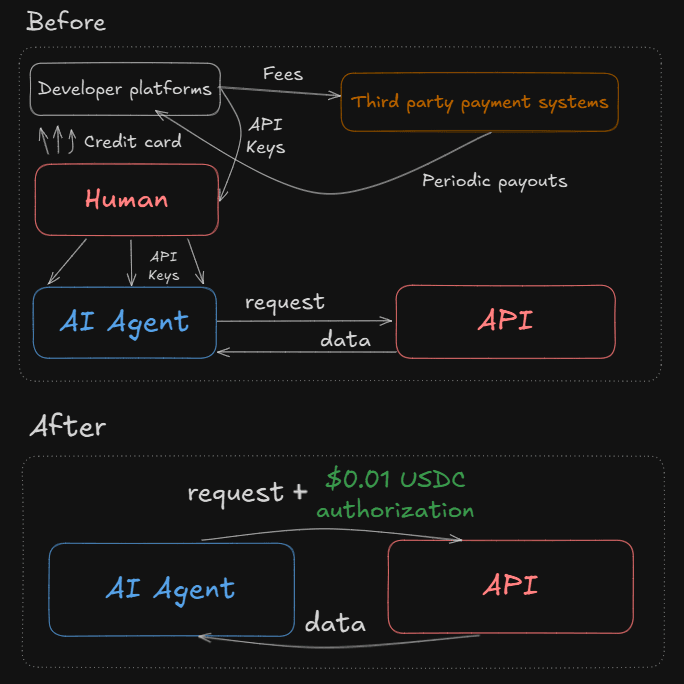
The landscape of AI agent commerce is shifting rapidly in 2026, with x402 emerging as the standard for machine-to-machine transactions. Traditional payment gateways were built for human shoppers, not autonomous software. They rely on complex checkout sessions, webhooks, and manual authentication that break down when an AI agent needs to buy a premium research feed in milliseconds. An agent doesn’t have a credit card on file or the ability to click through a CAPTCHA. It needs a protocol that speaks its language: HTTP.
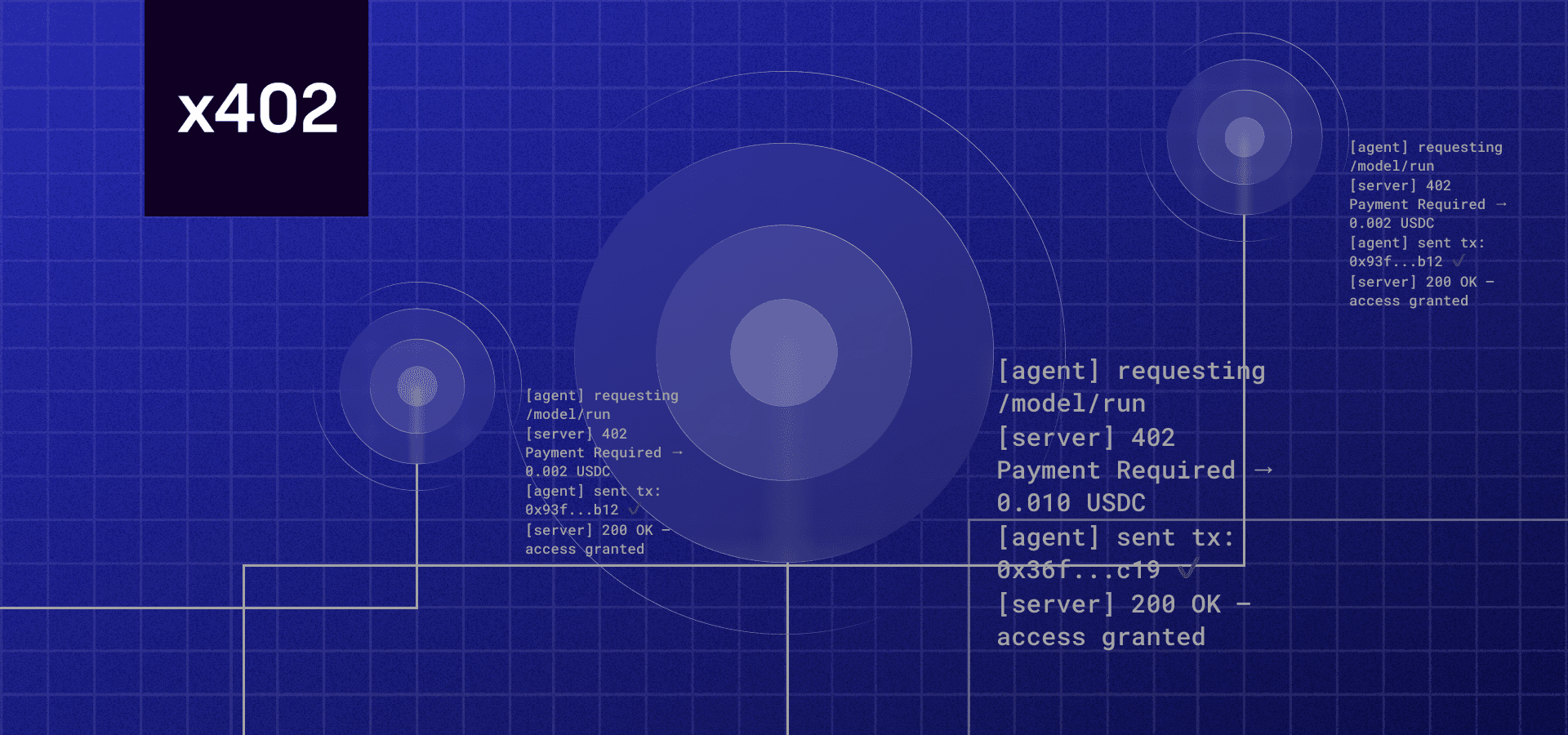
x402 solves this by using the standard HTTP 402 status code to signal a payment requirement. Instead of redirecting to a third-party processor, the endpoint returns a 402 with a Payment-Required header and a URI for payment. The agent pays, retries the request, and receives the data. This creates a seamless, machine-to-machine transaction loop that fits naturally into existing API architectures.
For financial services and research feeds, this means an AI agent can autonomously query a premium data source, pay the micropayment instantly, and access the information without human intervention. As noted in AWS industry analysis, this approach redefines autonomous payments by removing the friction of traditional commerce, allowing agents to treat data access like any other API call.
This shift is critical for premium research feeds, where data is scarce and valuable. By enabling x402 endpoints, providers can create new revenue streams from AI agents that are willing to pay for real-time, high-quality information without the overhead of enterprise contracts.
How premium research feeds work
x402 Endpoints for Premium Research Feeds works best as a clear sequence: define the constraint, compare the realistic options, test the tradeoff, and choose the path with the fewest hidden costs. That order keeps the advice usable instead of decorative.

Infrastructure for stablecoin settlement
To make x402 endpoints viable for premium research feeds, you need a backend that handles wallet creation, transaction signing, and fee settlement without introducing latency. The architecture typically involves a facilitator layer that abstracts the complexity of blockchain interactions, allowing your API to focus on data delivery rather than crypto-native plumbing.
For most developers, using a provider like Coinbase CDP or Thirdweb is the most efficient path. These services offer pre-built SDKs and hosted wallets that simplify the integration of x402 compliance. They handle the heavy lifting of gas management and transaction broadcasting, ensuring that your endpoint can respond to payment requests in real-time. This approach is particularly valuable when dealing with high-frequency agent interactions, where even a second of delay can break the user experience.
Comparing Facilitator Options
Choosing the right infrastructure depends on your team's existing stack and desired level of control. Below is a comparison of common facilitator approaches for x402 implementation.
| Facilitator | Integration Ease | Supported Chains | Settlement Speed |
|---|---|---|---|
| Coinbase CDP | High (SDKs) | Base, Ethereum | ~2 seconds |
| Thirdweb | High (SDKs) | Multi-chain | ~2 seconds |
| Custom Wallet | Low | Any | Variable |
Why USDC on Base?
The combination of USDC and the Base network has emerged as the standard for x402 payments, primarily due to its low cost and high speed. USDC provides the stability required for premium data pricing, while Base offers the throughput needed for micro-transactions without the friction of high gas fees on mainnet Ethereum.
This setup allows AI agents to pay for research data in fractions of a cent, making it economically feasible for automated workflows. The near-instant settlement time ensures that data access is granted immediately upon payment confirmation, creating a seamless loop between payment and service delivery. For developers building x402 endpoints, this stack minimizes the risk of failed transactions and maximizes the reliability of your premium feed.
Market trends in agent payments
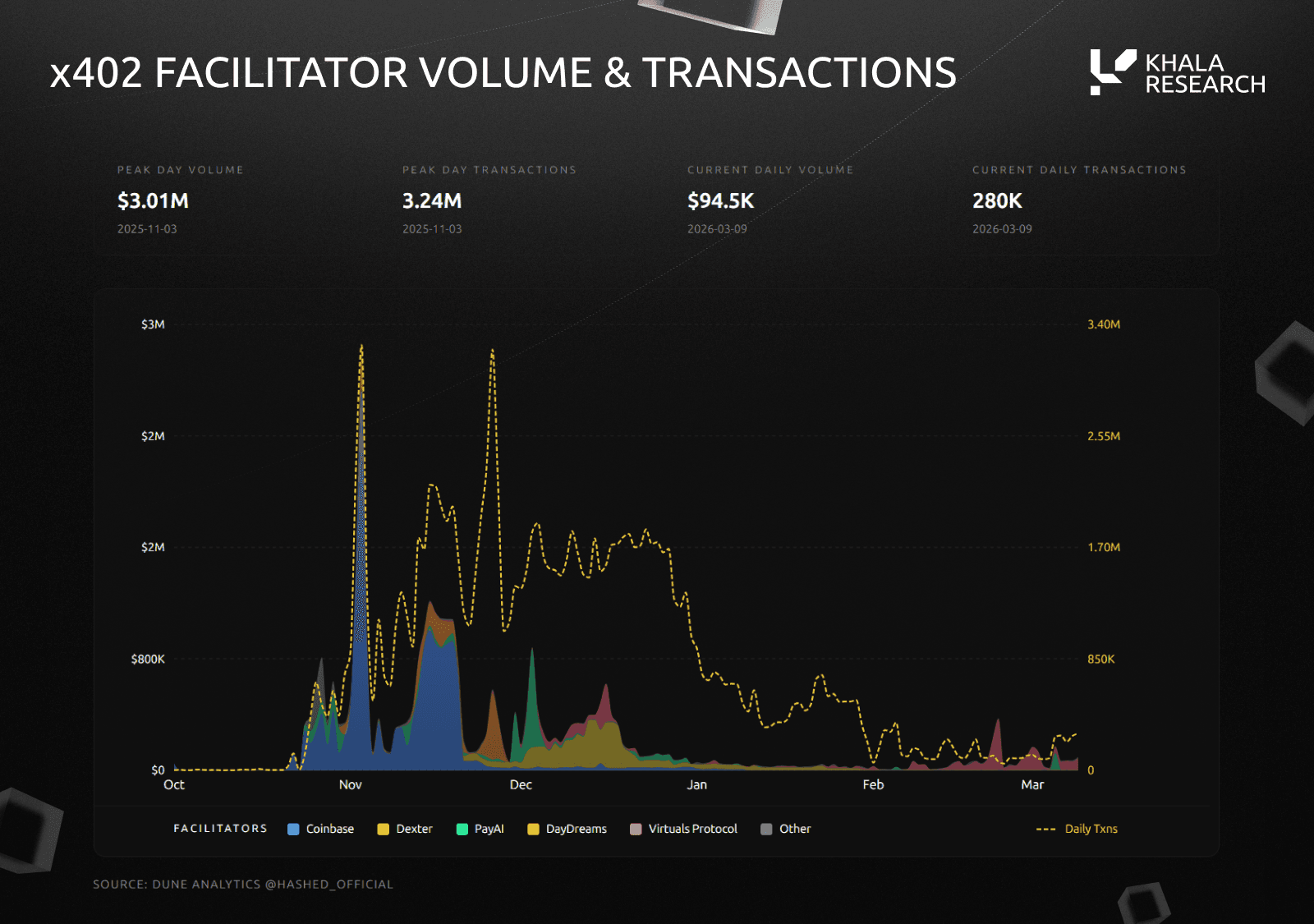
The shift toward x402 endpoints is no longer theoretical; it is becoming the standard for how AI agents handle premium data. Major infrastructure players like AWS and Cloudflare are already integrating x402 into their ecosystems, recognizing that autonomous commerce requires a payment layer that is as reliable as the underlying network. This adoption signals a move away from manual API key management toward self-sovereign, machine-to-machine transactions.
For developers building premium research feeds, this trend means your endpoints need to be ready for an agent-first world. AWS has published guides on enabling x402 payments on HTTP-based applications, highlighting how financial services can redefine autonomous payments. The infrastructure is stabilizing, making it the right time to align your research feed architecture with these emerging standards.
To understand the financial mechanics behind these transactions, it helps to look at the settlement layer. Stablecoins like USDC provide the necessary price stability for automated micro-payments, ensuring that research feeds can be billed in real-time without the volatility risks of traditional crypto assets.
Tools for building x402 endpoints
Implementing x402 endpoints for premium research feeds requires a stack that handles HTTP validation, crypto payments, and API routing. You don't need to build a blockchain node from scratch; instead, leverage existing libraries that abstract the payment logic.
Browserbase Integration
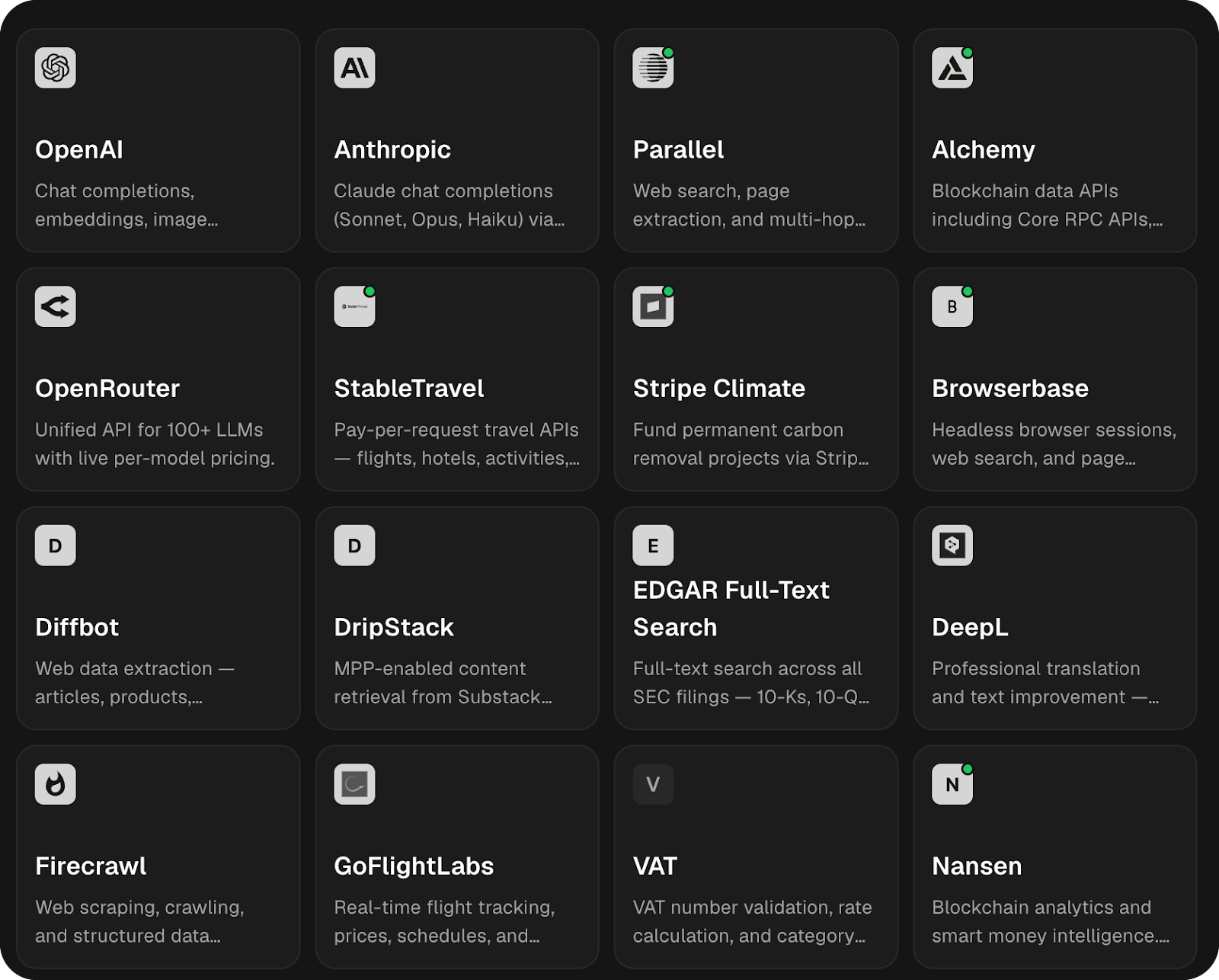
Browserbase offers a direct integration for x402, allowing you to create pay-per-use browser sessions. This is particularly useful if your premium research feed involves automated web scraping or data extraction. The integration handles the payment flow, letting you focus on the data pipeline rather than the transaction layer.
Simplescraper Library
For simpler API endpoints, the Simplescraper library provides a clear guide on implementing x402 payments. It demonstrates how to validate payments before serving data, making it a solid starting point for developers building lightweight research tools. The library’s documentation walks through a live payment example, which helps in understanding the request-response cycle.
Core Development Libraries
Beyond specific integrations, you will need core libraries to handle the underlying x402 protocol. Look for packages that support the 402 Payment Required status code and integrate with popular wallets. These tools ensure your endpoints can communicate with the broader crypto ecosystem without reinventing the wheel.

As an Amazon Associate, we may earn from qualifying purchases.
Checklist for secure implementation
Before you deploy x402 endpoints for premium research feeds, treat security as a feature, not an afterthought. The protocol introduces new attack surfaces that standard APIs don’t face, so your validation logic needs to be strict.
Always verify the x402 signature against the request body. Use Coinbase’s official documentation as your baseline for signature validation to ensure you’re rejecting malformed or tampered requests before they hit your business logic.

Premium data feeds are high-value targets. Ensure your endpoint ignores duplicate transaction IDs to prevent replay attacks. Without this, a single payment could serve the same research data multiple times.
Don’t leak internal infrastructure details in your error responses. Return standard HTTP codes and generic messages to the client while logging detailed diagnostics internally. This keeps your system secure while maintaining a good developer experience.
Never push x402 logic directly to production. Use the Coinbase testnet to simulate payment flows, edge cases, and failure states. This step saves you from costly bugs when real money is on the line.
Once your code is solid, monitor your endpoints. Watch for unusual traffic patterns that might indicate automated scraping attempts disguised as legitimate payments.
No comments yet. Be the first to share your thoughts!