Get x402 endpoints premium research right
Before deploying an x402 endpoint for premium research feeds, you must ensure your infrastructure is ready to handle micropayments and strict access control. This section outlines the essential prerequisites to prevent integration errors and revenue loss.
Verify CDP Facilitator Connectivity
Your endpoint must connect to the Coinbase Developer Platform (CDP) Facilitator. This connection allows your service to validate payments and enables AI agents to discover your data through the x402 Bazaar. Without this link, your endpoint remains invisible to automated buyers.
Implement Correct HTTP 402 Responses
When a request lacks valid payment credentials, your server must return an HTTP 402 status code. This response should include clear payment instructions, such as a payment URI or QR code. Generic error messages confuse users and break the automated payment flow expected by research tools.
Establish Payment Verification Logic
You need a reliable mechanism to verify that the payment associated with a request is valid and settled. This logic should check the transaction status against the blockchain or payment processor before serving the premium research data. Skipping this step exposes your data to free-riders.
Define Rate Limits and Data Scope
Premium research feeds often have high value. Set strict rate limits to prevent abuse and define exactly which data fields are accessible per payment tier. Clear boundaries protect your infrastructure and ensure consistent delivery for paying subscribers.
Build x402 Endpoints for Premium Research Feeds
Setting up an x402 endpoint requires shifting from traditional API key authentication to a payment-first model. This guide walks you through the technical sequence for building an endpoint that returns HTTP 402 responses, integrates with the CDP Facilitator, and delivers premium research data only after payment is confirmed.
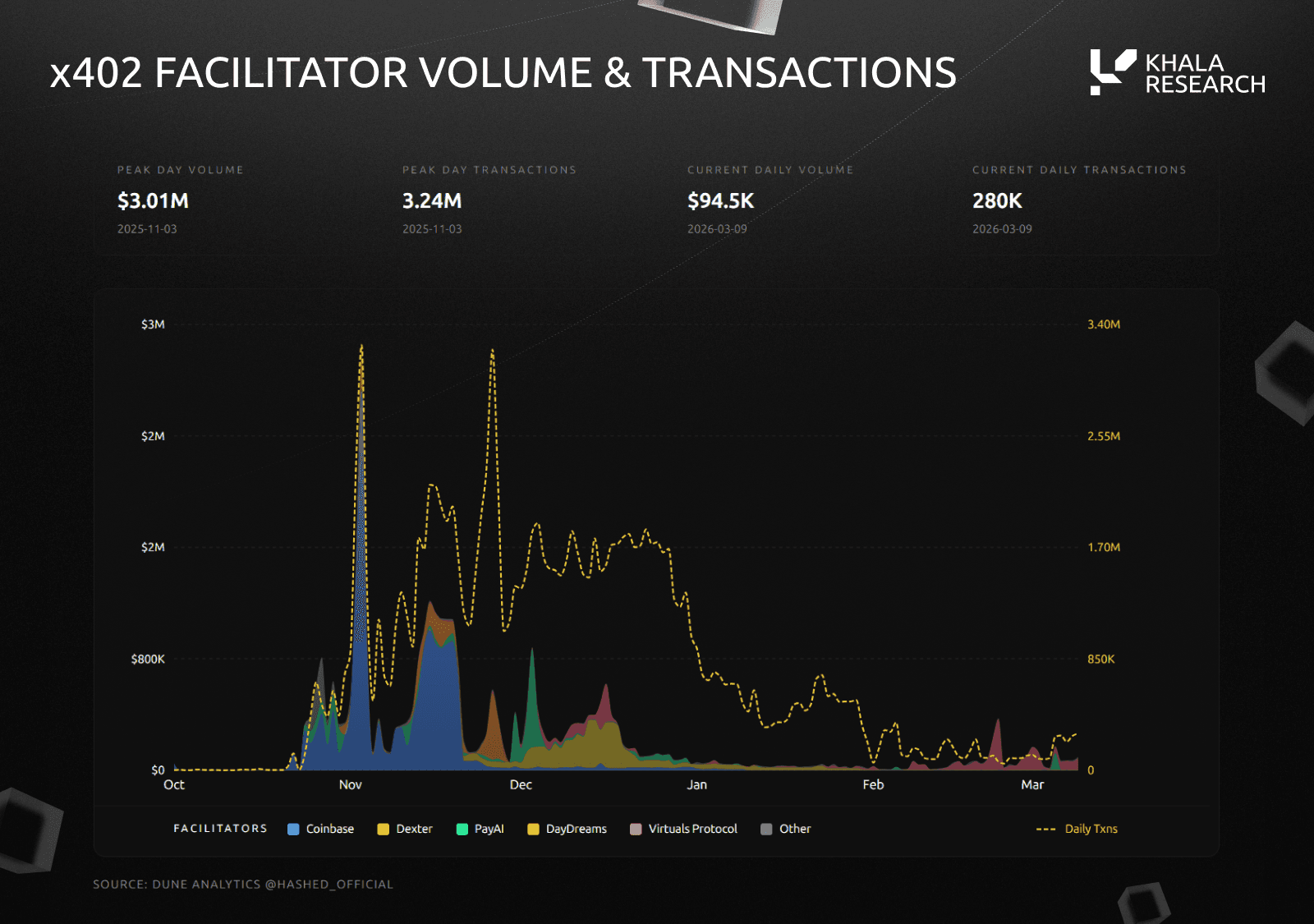
Return an HTTP 402 status code with a JSON body containing payment instructions. Include the x-payment-url header pointing to the CDP Facilitator endpoint. This tells the client exactly where to send payment to use the resource.

Register your endpoint with the CDP Facilitator to enable discovery and payment routing. The Facilitator handles the payment verification and redirects the client back to your endpoint with a valid payment token.
On subsequent requests, verify the x-payment-token header against the CDP Facilitator. If the token is valid and not expired, return the premium research data. If invalid or missing, return the 402 response again.
Use the CDP testnet to simulate payments. Verify that the 402 response includes the correct x-payment-url, that the Facilitator redirects correctly, and that your endpoint accepts the token.
-
Return HTTP 402 with x-payment-url header
-
Register endpoint with CDP Facilitator
-
Validate x-payment-token on requests
-
Test flow on CDP testnet
Common Mistakes in x402 Endpoint Configuration
Even with a clear protocol, many developers undermine their premium research feeds by skipping foundational checks. These errors don’t just slow down integration—they break the payment loop entirely. Below are the most frequent missteps and how to fix them before they impact your revenue.
Missing the 402 Status Code
The most basic error is returning a generic 404 or 500 error when a request lacks payment. The x402 standard requires a specific 402 Payment Required response. This status code signals to the client (or AI agent) that the resource is available but locked behind a payment wall. Without it, automated agents may retry indefinitely or abandon the endpoint, assuming the service is down.
Fix: Ensure your server logic explicitly checks for authentication or payment tokens before serving data. If neither is present, return HTTP 402 with a JSON body containing payment instructions, such as a crypto address or payment intent URL.
Overcomplicating Payment Instructions
When returning the 402 response, clarity is critical. Developers often bury payment details in complex HTML or vague error messages. AI agents and automated scripts need structured data to process payments efficiently. If the payment instructions are unclear, the transaction fails, and you lose the potential customer.
Fix: Use a clean JSON response format. Include the exact amount, currency (e.g., USDC), and a direct payment link or address. Keep the message concise: "Payment required. Send 0.01 USDC to [address] to access this data."
Ignoring Discovery Layer Integration
Many endpoints operate in isolation, making them invisible to AI agents searching for premium data. The x402 ecosystem relies on discovery layers like the CDP Bazaar to catalog and index services. If your endpoint isn’t registered here, agents can’t find it, regardless of how well it’s configured.
Fix: Register your endpoint with the CDP Facilitator. This ensures your service appears in search results and can be automatically discovered by agents. Use the official Bazaar endpoints to list your service, including metadata like data type, pricing, and access requirements.
Failing to Validate Payments Before Serving Data
Some developers return data immediately upon receiving a request, assuming the payment will be processed in the background. This creates a race condition where users access data without paying, or worse, where payments are lost due to network delays. The x402 model requires strict validation: no data until payment is confirmed.
Fix: Implement a payment verification step before serving any content. Use a blockchain explorer or payment processor API to confirm the transaction has been completed and confirmed on-chain. Only then should you serve the requested data.
Neglecting Rate Limiting and Abuse Prevention
Premium research feeds are attractive targets for scrapers and bots. Without rate limiting, your endpoint can be overwhelmed by excessive requests, leading to high infrastructure costs and degraded service for paying users. This also makes it harder to track legitimate usage patterns.
Fix: Implement strict rate limiting based on IP address or user tokens. Use tools like Redis or cloud-based rate limiters to track request counts. Consider adding CAPTCHA challenges for suspicious activity, but ensure this doesn’t interfere with automated agent workflows.
Not Testing with Real Agents
Many developers test their endpoints using simple curl commands or browser requests. This misses the nuances of how AI agents interact with x402 services. Agents may handle headers, retries, and error responses differently than human users or standard HTTP clients.
Fix: Test your endpoint using real AI agents or simulators that mimic agent behavior. Check how your 402 response is parsed, whether payment instructions are correctly interpreted, and if the agent can successfully complete the payment flow. Use the CDP Bazaar test environment to validate your setup before going live.
X402 endpoints for premium research feeds: common: what to check next
Building and integrating x402 endpoints for premium research feeds involves navigating both protocol specifics and market realities. Below are answers to the most frequent technical and strategic questions we encounter from developers and data providers.
Helpful gear
Use these product recommendations as a starting point, then choose the size, material, and price point that fit how you actually use the gear.


As an Amazon Associate, we may earn from qualifying purchases.
No comments yet. Be the first to share your thoughts!