
Why x402 fits premium research feeds
The traditional web API model relies on static API keys and subscription tiers that struggle with the dynamic, high-volume nature of modern financial data. Premium research feeds—think real-time order book snapshots or arbitrage signals—are expensive, low-margin, and highly susceptible to scraping. x402 addresses this by embedding the payment mechanism directly into the HTTP protocol. This shifts the paradigm from "pay to access" to "pay per use," allowing systems to settle micro-transactions instantly without human intervention.
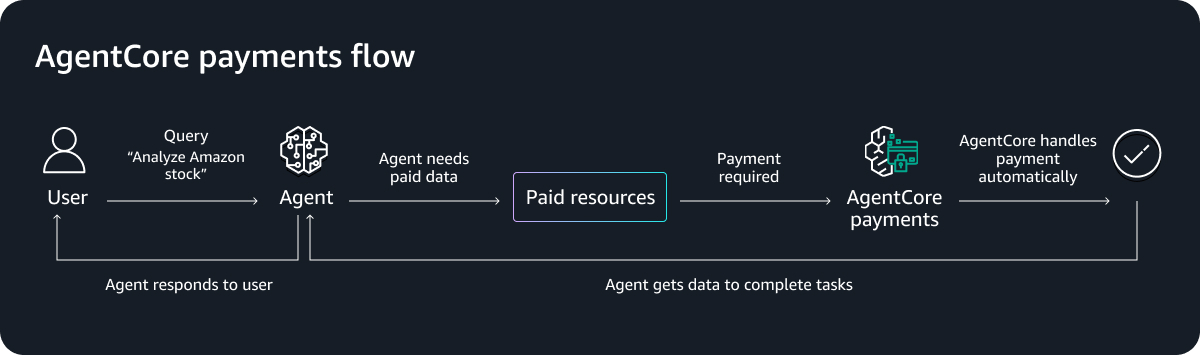
For high-stakes financial environments, latency and security are non-negotiable. x402’s machine-to-machine payment model eliminates the friction of traditional billing cycles and the security risks associated with long-lived API keys. An AI agent can request a specific data point, verify the response, and settle the payment in stablecoins automatically. This creates a closed-loop system where access is granted only upon verified payment, significantly reducing the attack surface for data theft.
AWS notes that this architecture allows autonomous agents to pull premium data feeds to scan for opportunities without waiting for human approval, effectively removing the bottleneck of manual transaction authorization. This level of automation is critical for trading algorithms that operate on millisecond timeframes, ensuring that data access is both instantaneous and financially auditable.
Designing the payment-gated endpoint
Use this section to make the x402 Endpoints for Premium Research Feeds decision easier to compare in real life, not just on paper. Start with the reader's actual constraint, then separate must-have requirements from details that are merely nice to have. A practical choice should survive normal use, maintenance, timing, and budget. If a recommendation only works in an ideal situation, call that out plainly and give the reader a fallback path.
-
Verify the basicsConfirm the core specs, condition, and fit before comparing extras.
-
Price the downsideLook for the repair, maintenance, or replacement cost that would change the decision.
-
Compare alternativesCheck at least two comparable options before treating one listing as the benchmark.
Integrating with AI research agents
Use this section to make the x402 Endpoints for Premium Research Feeds decision easier to compare in real life, not just on paper. Start with the reader's actual constraint, then separate must-have requirements from details that are merely nice to have. A practical choice should survive normal use, maintenance, timing, and budget. If a recommendation only works in an ideal situation, call that out plainly and give the reader a fallback path.
The simplest way to use this section is to write down the must-have criteria first, then compare each option against those criteria before weighing nice-to-have features.
Security and compliance considerations
Use this section to make the x402 Endpoints for Premium Research Feeds decision easier to compare in real life, not just on paper. Start with the reader's actual constraint, then separate must-have requirements from details that are merely nice to have. A practical choice should survive normal use, maintenance, timing, and budget. If a recommendation only works in an ideal situation, call that out plainly and give the reader a fallback path.
The simplest way to use this section is to write down the must-have criteria first, then compare each option against those criteria before weighing nice-to-have features.
Implementing x402 for market analysis
Connecting premium research feeds to your trading logic requires more than just an API key; it demands a payment layer that survives in hostile network environments. The x402 protocol embeds payment verification directly into the HTTP request, ensuring your market data endpoints reject unauthorized access before processing a single byte of latency-sensitive data. This approach is critical when you are pulling real-time order book depth or executing high-frequency analysis where a standard token leak could expose your strategy.
Think of the x402 endpoint as a strategic chess move. You are not just locking the door; you are placing the payment requirement on the square where the opponent must step. By integrating x402, you shift the burden of authentication from a separate session layer to the data request itself. This reduces the attack surface for replay attacks and ensures that every piece of premium data fetched is accounted for in real-time.
To deploy this effectively, follow this implementation checklist:
- Verify Payment Signature: Ensure your server checks the
x-paymentheader against the x402 specification before returning data. - Limit Data Scope: Return only the specific fields required for the analysis to minimize payload size and exposure.
- Handle Rate Limits: Implement strict per-IP or per-wallet rate limiting to prevent resource exhaustion.
- Log Transaction IDs: Record every successful payment ID for audit trails and dispute resolution.
Implementing these steps creates a resilient data pipeline. The x402 protocol allows you to monetize your research feeds while maintaining strict security controls, turning your data into a secure, high-value asset.

Frequently asked questions about x402
How does x402 handle payments for premium data?
x402 is an HTTP-native payment protocol that allows AI agents to pay per request with stablecoins. Unlike traditional subscription models, it removes the need for user accounts or manual human approval. The protocol integrates directly into the HTTP response, ensuring that access to high-value research feeds is gated by a successful on-chain transaction before data is delivered.
Can x402 be used for high-frequency arbitrage scanning?
Yes, but with a critical architectural constraint. As noted in industry analyses of agentic commerce, an AI research agent scanning for arbitrage opportunities may need to pause and wait for a human to approve the initial funding or payment threshold. This human-in-the-loop step is essential for high-stakes financial operations, preventing autonomous agents from draining capital during rapid market shifts.
What is the technical difference between x402 and standard APIs?
Standard APIs typically rely on static API keys or OAuth tokens for authentication. x402 adds a payment layer directly into the HTTP request lifecycle. The server checks for a valid payment signature before returning the payload. This transforms a simple data endpoint into a self-sovereign, micropayment-ready service, enabling granular billing for premium market data that standard API gateways cannot easily support.
Is x402 limited to cryptocurrency-only users?
No. x402 is designed to be agnostic to the underlying asset, though it primarily utilizes stablecoins for predictable pricing in financial contexts. The protocol is built to work with existing HTTP infrastructure, meaning it can be integrated into current financial data pipelines without requiring a complete overhaul of the backend architecture.
Helpful gear
Use these product recommendations as a starting point, then choose the size, material, and price point that fit how you actually use the gear.


As an Amazon Associate, we may earn from qualifying purchases.
No comments yet. Be the first to share your thoughts!