Set up the x402 payment gateway
Before your premium research feed can accept payments, you need to connect your API to an x402 facilitator. This gateway handles the heavy lifting of verifying micro-payments and ensuring that only paying users or AI agents access your data.
We will use the Coinbase Developer Platform (CDP) for this guide, as it offers a straightforward SDK for sellers. The process involves installing the package, configuring your environment, and initializing the client in your backend code.
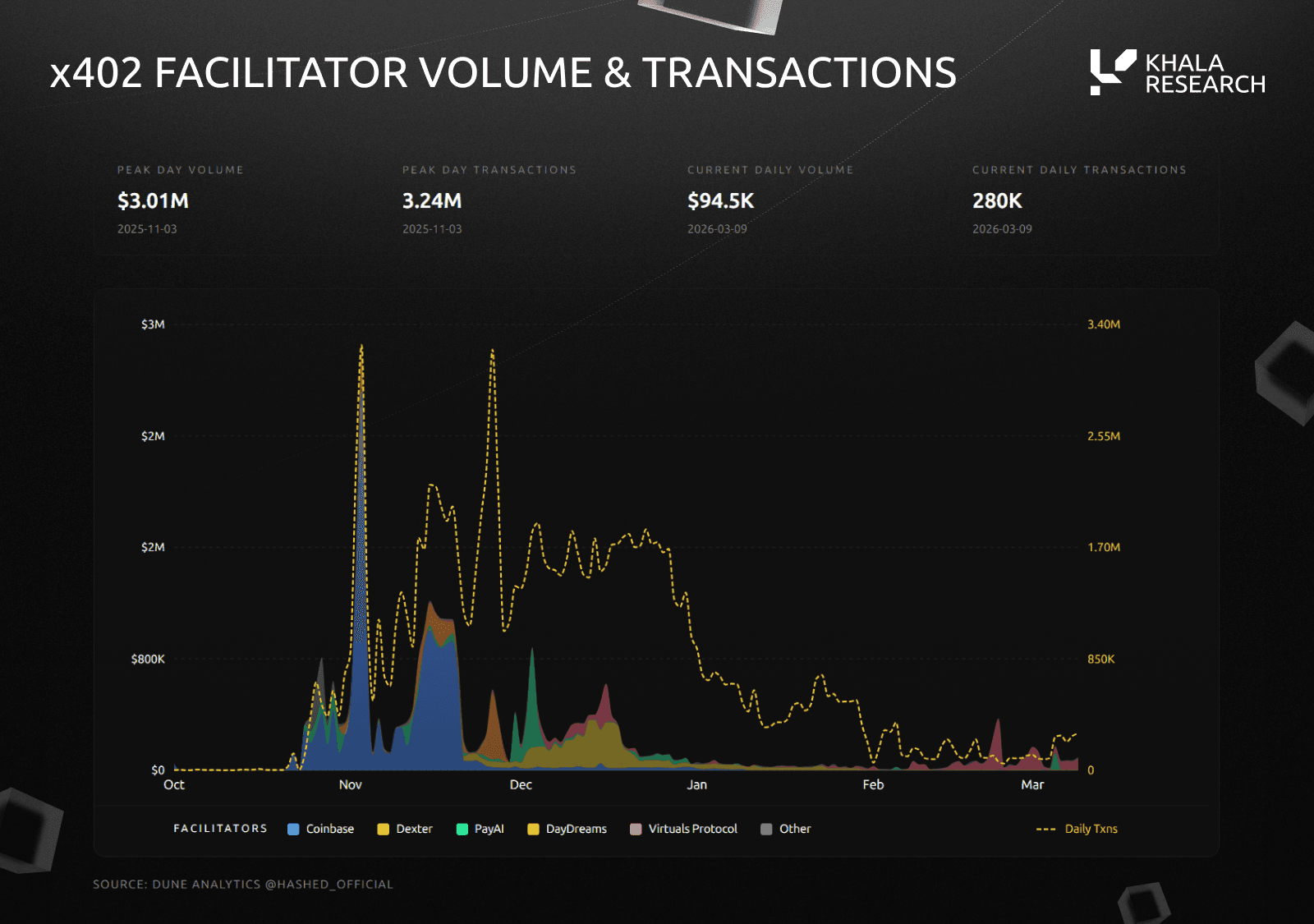
Start by adding the official x402 package to your project. If you are using Node.js, run npm install @coinbase/x402. This library provides the necessary functions to sign requests and verify payment proofs from the blockchain. Ensure your environment is set to the correct network (mainnet or testnet) before proceeding.
Go to the Coinbase Developer Platform dashboard to generate your API credentials. You will need your API_KEY and API_SECRET. Store these in a .env file immediately; never hardcode them into your source code. These keys identify your application to the x402 network and allow you to monitor transactions.
Import the SDK into your main server file and instantiate the client using your environment variables. The client will automatically handle the handshake with the x402 facilitator. Test the connection by making a simple health-check request to ensure your API can communicate with the payment layer without errors.
Once the client is initialized, your API is ready to enforce payment gates. In the next section, we will configure the specific endpoints to require x402 proofs for access.
Implement pay-per-use logic in endpoints
To serve premium research data, your API must verify that the client has attached a valid x402 payment header to the request. This header contains a signed proof of payment that your server needs to validate before returning any sensitive or high-value information. The process involves extracting the header, parsing the payment proof, and verifying the cryptographic signature against the sender's public key.
Start by accessing the incoming HTTP request object in your server-side code. Look for the x402 header, which should contain the payment proof as a JSON Web Signature (JWS) or a similar structured format. If this header is missing, reject the request immediately with a 402 Payment Required status code. Do not proceed to any data retrieval logic until you have confirmed the presence of this credential.
Once you have the header value, decode it to access the underlying payment details. The proof typically includes the transaction ID, the amount paid, the recipient address, and the data scope being requested. Ensure the data scope matches the specific endpoint being accessed; a payment for a "market data" feed should not grant access to "research reports" unless explicitly bundled. Validate that the timestamp is within an acceptable window to prevent replay attacks.
This is the most critical security step. Never trust the client-side data. Use your preferred cryptographic library to verify the signature using the sender's public key, which should be resolvable from their address or a known registry. This ensures the payment was genuinely authorized by the holder of the private key. If the signature is invalid or expired, discard the request and log the attempt for security auditing.
If the signature is valid and the payment scope matches the request, proceed to fetch the premium research data from your database or external source. Attach any necessary rate-limiting metadata to the response headers to track usage. Return the data in your standard JSON format. If verification fails at any point, return a clear 402 error with a message explaining that the payment proof was invalid or insufficient.
For a deeper understanding of the protocol structure, refer to the official x402 specification documentation. Implementing this logic ensures that your premium research feeds remain accessible only to those who have completed the transaction, maintaining the integrity of your data monetization strategy.
Structure premium research data feeds
Once your x402 endpoint is listening, the next step is packaging the data itself. Premium research feeds—like real-time market sentiment or granular crypto price action—must be delivered in a format that AI agents can parse instantly. We’re not just serving JSON; we’re serving structured intelligence that triggers automated actions.
Start by defining a strict schema. AI agents rely on predictable structures. If your endpoint returns inconsistent field names or nested objects that vary between requests, the agent will fail to extract the value. Use a standard JSON structure with clear, flat keys for primary metrics. For example, a crypto price feed should explicitly separate symbol, price, timestamp, and source.
Next, implement data enrichment. Raw prices are useful, but premium feeds add context. Include metadata such as the data source (e.g., Binance, Coinbase), the latency of the update, and any relevant sentiment scores if you’re aggregating news. This extra layer transforms a simple data point into a research-grade insight.
Finally, secure the payload. Since these feeds are high-value, ensure your endpoint validates incoming requests and signs the response if necessary. This prevents tampering and ensures the agent trusts the data it receives. A well-structured, secured feed is the difference between a basic API and a premium research service.


As an Amazon Associate, we may earn from qualifying purchases.
Test the endpoint with agent clients
Before launching your x402 endpoint for premium research feeds, you need to verify that both AI agents and human users can access the paywall smoothly. The goal is to ensure the payment flow is frictionless and the data delivery is accurate. This section walks you through a practical verification workflow using the Browserbase integration, which provides a robust framework for testing x402-compliant endpoints.
Start by deploying your endpoint in a staging environment. Use a dedicated test wallet and a small amount of USDC on a testnet (like Sepolia) or a low-fee mainnet layer. This isolates your testing from live production traffic and prevents accidental charges to real users. Ensure your API key and payment gateway credentials are configured exactly as they will be in production.
Most premium research feeds will be consumed by AI agents. Use a tool like Browserbase or a simple Python script to simulate an agent request. The agent should first call your endpoint without payment headers to confirm it returns a 402 Payment Required status. Then, have the agent initiate a payment via the x402 facilitator. Once the transaction is confirmed, the agent should resend the request with the payment proof header. Verify that the endpoint now returns the premium research data.
Ensure the data returned after payment matches your source material exactly. Check for any truncation or formatting errors that might occur during the payment verification process. Also, measure the latency between payment confirmation and data delivery. If the delay is excessive, your agent might timeout. Aim for a response time that is imperceptible to the user, typically under 200ms after payment verification.
Agents often retry failed requests. Test how your endpoint handles edge cases: expired payment proofs, insufficient funds, or network timeouts. Ensure your API returns clear, actionable error messages (e.g., 400 Bad Request for invalid headers, 401 Unauthorized for expired tokens) rather than generic server errors. This helps agents debug their own logic without clogging your logs with ambiguous failures.
-
Testnet wallet funded with test USDC
-
Payment gateway credentials configured
-
AI agent simulation script ready
-
Data integrity verification script ready
-
Error response codes documented
-
Latency benchmarks established
Finally, consider testing with a human user interface if your feed has a web component. While agents are the primary consumers, humans may also access the data via a dashboard. Ensure the payment flow works seamlessly for both. For more details on the x402 protocol integration, refer to the Browserbase documentation.
Common x402 integration mistakes
Building x402 endpoints for premium research feeds requires strict adherence to the protocol specification. Developers often stumble on implementation details that seem minor but break payment verification entirely. Here are the specific pitfalls to avoid when integrating x402 into your data infrastructure.
Ignoring the x-pay header structure
The x402 specification relies on the x-pay header to carry payment credentials. A common error is parsing this header loosely or assuming it always contains a single token. In practice, the header may contain multiple signed payloads or complex JSON structures depending on the client implementation. You must parse the header according to the official x402 ecosystem standards, not your own assumptions. Failing to validate the signature structure correctly will lead to unauthorized access or rejected requests.
Failing to handle network congestion
Blockchain transactions are not instantaneous. When your endpoint receives an x402 payment, the underlying transaction may still be pending in the mempool. If you verify payment status immediately without waiting for confirmations, you risk serving data before the payment is final. This creates a race condition where users can exploit the delay. Always implement a verification step that checks for sufficient block confirmations before releasing premium research data. This ensures the payment is irreversible and the transaction is settled on-chain.
Overlooking idempotency
Research feeds often trigger high-frequency requests. If a client retries a payment due to a timeout, you might process the same payment twice, leading to duplicate data delivery or account balance errors. Implement idempotency keys in your payment verification logic. Check if a specific transaction ID has already been processed before granting access. This prevents double-charging and ensures consistent state management across your API endpoints.
No comments yet. Be the first to share your thoughts!