What x402 Enables for Research Data
x402 is an HTTP extension that allows APIs to request payment before returning data, enabling autonomous transactions between AI agents and data providers. It transforms standard REST endpoints into monetizable assets by embedding payment logic directly into the protocol layer. For AI agents, this means they can query a premium research feed and receive the data without human intervention or manual API key rotation for every transaction.
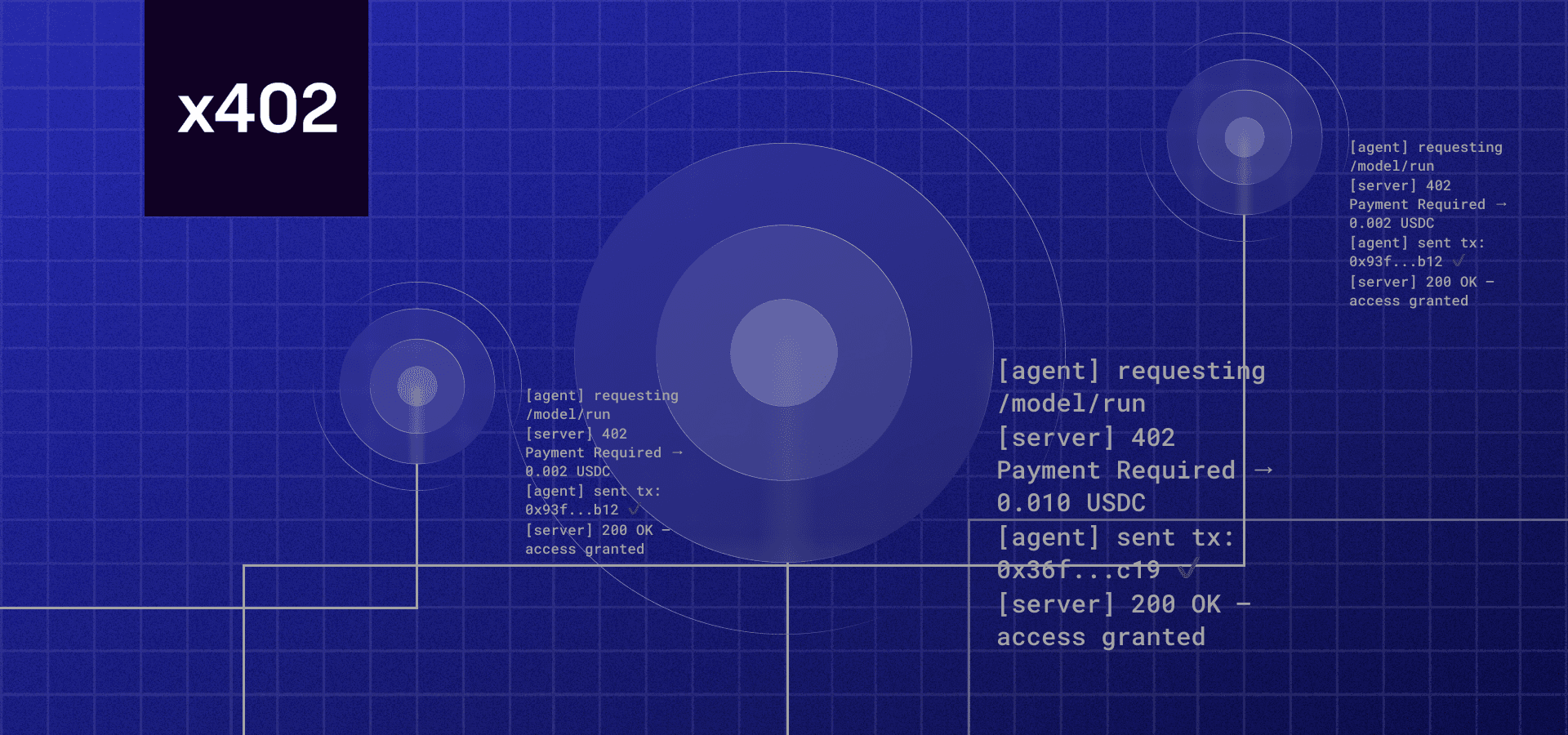
The standard works by having the server return a 402 Payment Required status along with a payment instruction, typically in the form of a Lightning Network invoice or on-chain payment request. The agent pays, and the server responds with the requested JSON payload. This creates a frictionless micro-transaction economy where high-value research data can be sold in small, precise increments rather than requiring large, upfront subscriptions.
For fintech architects, this shifts the infrastructure model. Instead of building complex billing engines and subscription management systems, you simply expose your data endpoint as x402-compliant. The payment verification happens automatically. This is essential for monetizing high-value research feeds to AI agents, as it aligns the cost of data with its actual usage, making premium data affordable and accessible for machine-to-machine workflows.
Setting up the payment facilitator
To build premium research feeds that actually get paid, you need a payment facilitator. This layer handles the handshake between your API and the x402 protocol, ensuring that invoices are generated, payments are verified, and data is released only when funds clear. Without this middleware, your endpoints remain public resources rather than secure, monetized assets.
The integration process is straightforward if you follow the official seller quickstart guides. We will walk through the three core steps: installing the SDK, configuring your environment, and implementing the response middleware.
Start by adding the facilitator package to your project dependencies. The SDK provides the necessary classes to parse x402 invoices and validate payment proofs. For Node.js environments, this is typically a simple npm install or yarn add command targeting the official facilitator library. This step ensures your server has the cryptographic tools to interact with the protocol.
Your facilitator needs a wallet to receive payments and sign invoices. Generate a secure key pair and store the private key in your environment variables—never hardcode it. You will also need to configure the network ID (e.g., Base Sepolia for testing, Base Mainnet for production) and your receiver address. This configuration ensures that when a researcher or AI agent pays, the funds go to the correct destination.

The final step is wrapping your API route logic with the facilitator’s middleware. This middleware intercepts incoming requests, checks for a valid Payment-Payment header or invoice, and verifies the payment status against the blockchain. If payment is confirmed, it allows the request to proceed to your premium data logic; otherwise, it returns a 402 status code with an invoice for the user to settle.
Designing Endpoints for Agent Consumption
Autonomous agents don't browse websites; they parse JSON. If your premium research data is locked behind a human-centric login flow, it remains invisible to the AI economy. To make your endpoints truly consumable, you must structure your API paths to be self-describing and your pricing signals to be machine-readable. The goal is to reduce the friction between an agent's intent and your data's value.
Structuring Discoverable Paths
Agents rely on predictable patterns to discover and invoke services. Instead of opaque identifiers, use semantic path segments that clearly indicate the data type and action. For example, a path like /v1/company/research immediately signals to an agent that it is querying company intelligence, while /v1/competitors/analyze suggests a comparative analysis endpoint. This clarity helps agents map their internal logic to your external API without needing extensive documentation lookups.
When designing these endpoints, ensure that the response schema is consistent. Agents struggle with variable structures. A standardized JSON response that includes metadata about the data source, timestamp, and confidence score allows agents to validate the quality of the information before it enters their reasoning loop. This consistency is critical for building trust in automated decision-making workflows.
Embedding Pricing Signals
The x402 protocol enables microtransactions at the HTTP level, but the agent needs to know the cost before it commits to the request. Your endpoints should return clear pricing headers or include cost information in the response metadata. This allows the agent to budget its token spend against the value of the data it retrieves. Without transparent pricing, agents will either overpay or avoid your endpoint entirely in favor of free, lower-quality alternatives.
Think of your API as a vending machine for intelligence. The agent inserts the correct payment (via x402), and the machine dispenses the exact data requested. If the machine is confusing, the agent will walk away. By keeping the interface simple, the pricing clear, and the data structured, you enable agents to integrate your premium research seamlessly into their autonomous workflows.
USDC settlement on Base
Base is the settlement layer for x402 because it handles the volume required by machine-to-machine payments without the friction of legacy networks. For microtransactions, even a few cents in gas can make a valid API call unprofitable. Base’s low fees and high throughput allow agents to pay for data or compute in real-time, keeping the cost per transaction negligible.
We use USDC on Base for settlement. It is a regulated, dollar-pegged stablecoin that provides the price stability necessary for automated billing. Unlike volatile assets, USDC ensures that the value agreed upon at the time of the request is the value settled on-chain, eliminating hedging overhead for the seller.
To handle these flows, your endpoint must verify the on-chain transfer before returning data. This is typically done by checking the transaction hash provided in the x-payment-hash header against the Base blockchain. Once confirmed, the data is released. This creates a trustless, atomic exchange where payment and delivery are tightly coupled.
Understanding the cost context is essential for pricing your endpoint. You can monitor USDC stability and transaction fee trends using live market data.
This setup forms the backbone of agentic commerce. By leveraging Base’s infrastructure, you enable a scalable, automated payment layer that works seamlessly with existing HTTP-based APIs.
Scaling Infrastructure for High-Volume x402 Traffic
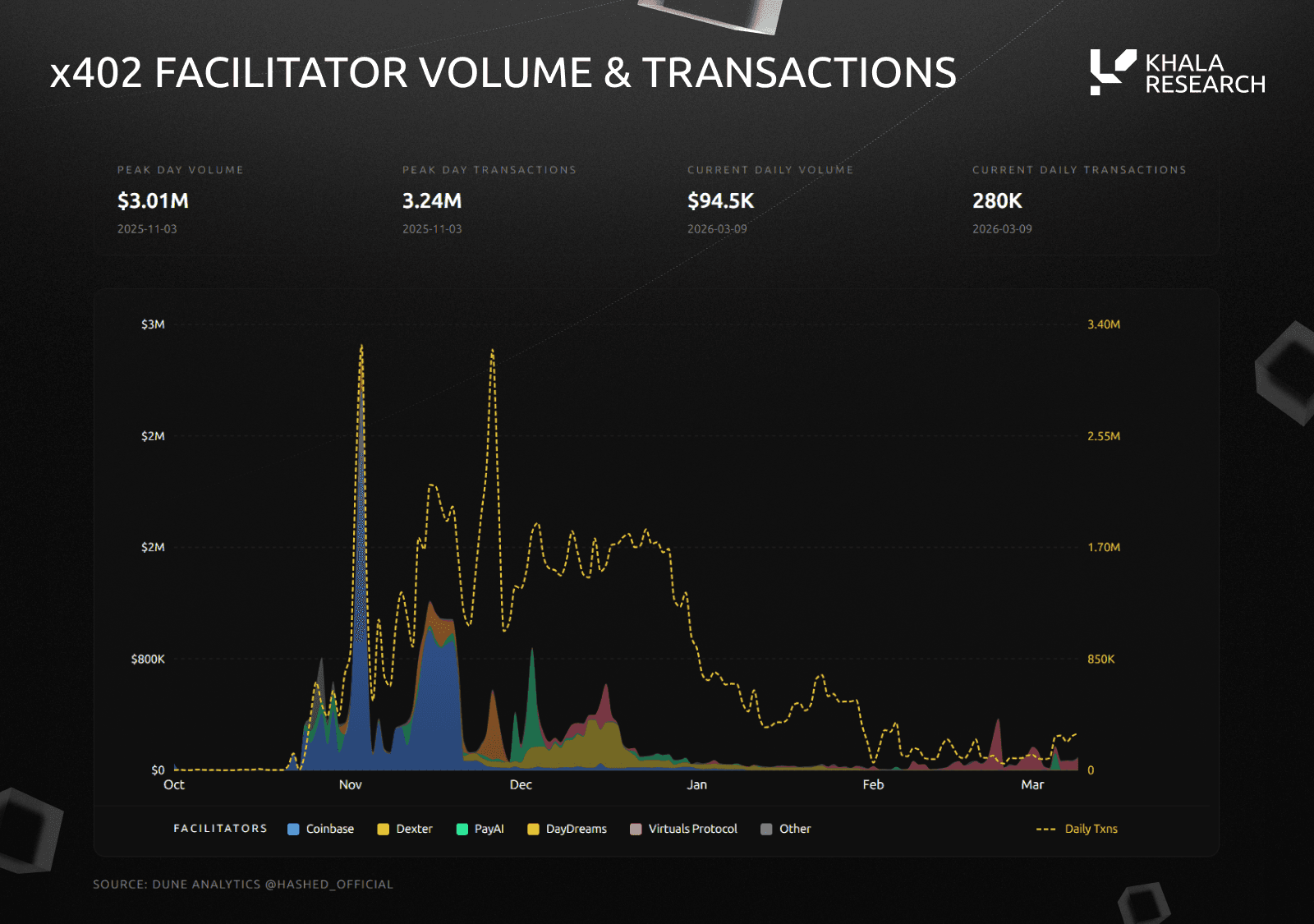
When agent-to-agent commerce moves from pilot projects to production, the underlying infrastructure must handle bursty, high-frequency HTTP requests without choking. Unlike traditional user-facing APIs, x402 endpoints often face sudden spikes as autonomous agents batch-process payments or refresh subscriptions. To maintain reliability, you need a strategy that prioritizes low-latency response times and strict rate control.
Rate limiting is your first line of defense. Implementing token bucket algorithms at the edge prevents any single agent from monopolizing bandwidth. This ensures that critical premium research feeds remain available even during peak load. Pair this with aggressive caching strategies for static metadata, but keep payment verification logic stateless and fast. Cloud providers like AWS offer native solutions for this, such as API Gateway with custom authorizers, which can validate x402 proofs before they ever hit your backend servers.
Integrating with established cloud ecosystems simplifies the heavy lifting. AWS, for instance, provides a clear path for deploying x402-enabled services using serverless architectures. By leveraging Lambda functions behind API Gateway, you can auto-scale to handle thousands of concurrent agent requests while only paying for actual compute time. This approach reduces operational overhead and allows your team to focus on the logic of the research feed rather than the plumbing of the payment protocol.
Security and auditability are also critical at scale. Every x402 transaction should be logged with immutable records to support dispute resolution and compliance. Using managed services for logging and monitoring ensures you have full visibility into transaction flows. This transparency builds trust with both the agents accessing your data and the financial institutions that may eventually settle these micro-transactions.
Ultimately, scaling x402 infrastructure is about balancing speed with security. By combining robust rate limiting, efficient caching, and cloud-native auto-scaling, you can build a system that handles the demands of agentic commerce reliably.
Tools and resources for builders
Starting an x402 endpoint requires bridging traditional API logic with on-chain payment verification. The ecosystem is maturing quickly, with official documentation providing the most reliable entry points for developers.
The Coinbase Developer Platform (CDP) offers a dedicated quickstart guide for sellers. This resource walks you through the specific headers and response codes needed to accept x402 payments alongside standard API responses. For a broader view of what is possible, the awesome-x402 repository on GitHub curates community-built endpoints, ranging from company intelligence to sales signal analysis.
Essential Reading and Hardware
While software libraries handle the heavy lifting, having the right reference materials speeds up integration. The following resources help architects design robust x402-compatible services.


As an Amazon Associate, we may earn from qualifying purchases.
No comments yet. Be the first to share your thoughts!