What x402 brings to research data
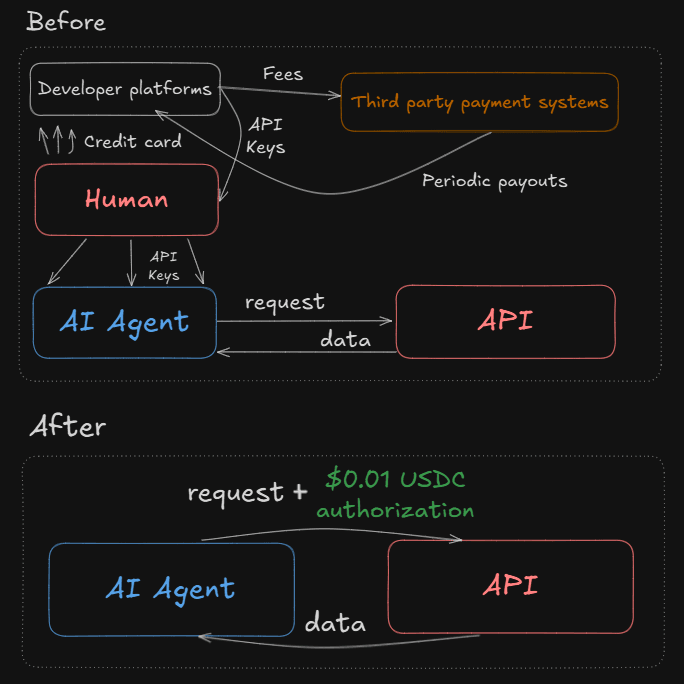
x402 is an open payment standard that brings micropayments directly into the HTTP protocol. Instead of treating payments as a separate, external checkout flow, x402 uses the standard HTTP 402 "Payment Required" status code. This means a client can request a resource, and the server responds with a payment prompt before delivering the data. It turns a complex billing integration into a simple, native web interaction.
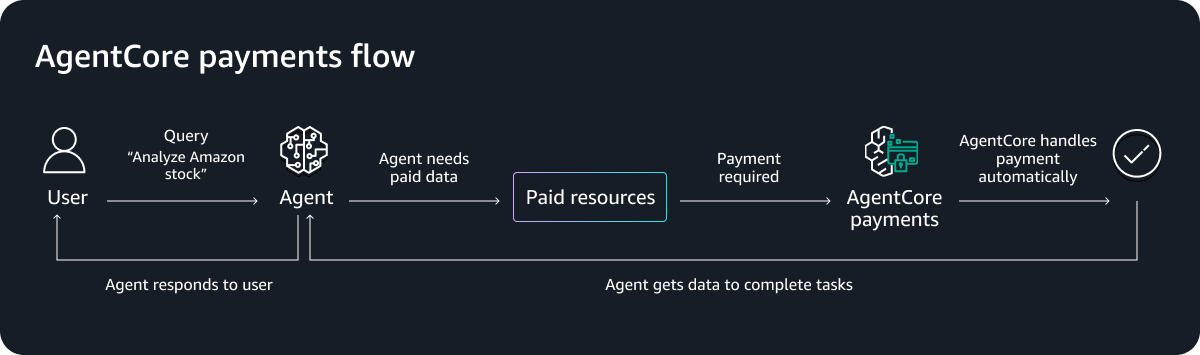
For AI agents and automated research tools, this architecture solves a significant friction problem. Traditional API access often requires expensive enterprise contracts, manual invoice processing, or cumbersome subscription management. With x402, an AI agent can programmatically request premium financial research, receive the 402 challenge, pay via USDC, and immediately receive the data. There are no middlemen, no recurring billing cycles, and no manual approvals.
This shift is particularly valuable for real-time market data and compliance feeds. Because the payment happens at the protocol level, you can offer granular access to specific data points—such as a single research report or a minute of high-frequency trading data—without requiring the user to upgrade their entire subscription tier. It creates a liquid market for data where access is instant, transparent, and automated.
Set up the x402 facilitator
Before you can build endpoints that accept micropayments, you need a facilitator. Think of the facilitator as the bank that clears transactions between your research feed and the AI agents or clients requesting data. Without it, your API endpoints have no way to verify payment or release content securely.
The x402 standard relies on this infrastructure to handle the cryptographic proofs required for agent commerce. You will use the Coinbase Developer Platform (CDP) or the official x402.org documentation to spin up this layer. This guide walks you through the official CDP setup, which is currently the most robust path for production-grade research feeds.
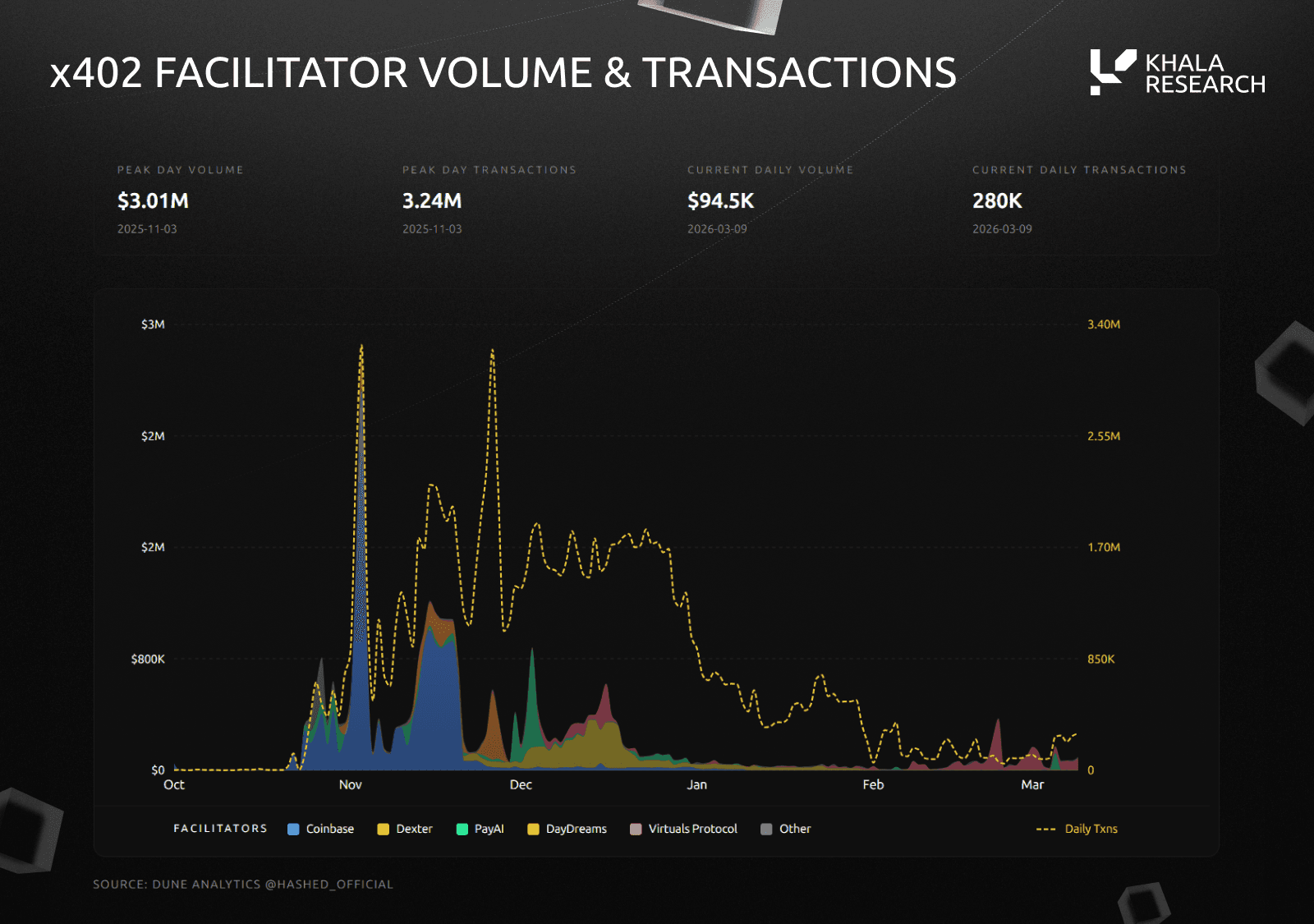
Visit the Coinbase Developer Platform to register or log in. The CDP provides the necessary API keys and environment variables to authenticate your facilitator. Ensure your account is verified, as payment processing requires a higher trust level than standard API access.
Install the x402 facilitator CLI or SDK in your project directory. This tool acts as the middleware between your backend server and the blockchain network. It handles the generation of payment proofs and validates that the client has transferred the required funds before your endpoint returns any research data.
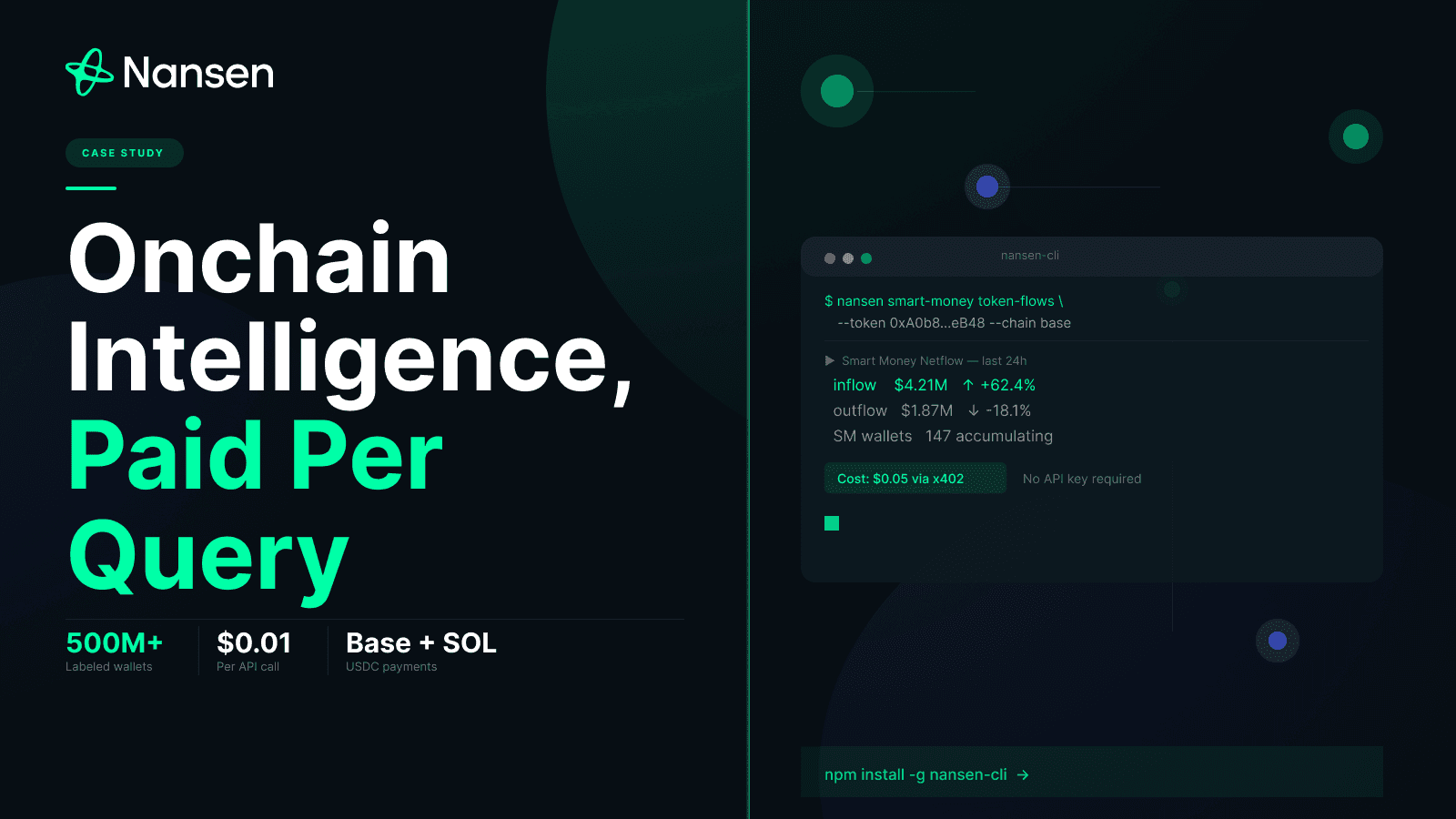
Define the routes that will accept payments. In your facilitator configuration, map specific API paths to their corresponding price tiers. For premium research feeds, you might set a base fee for access or a per-request cost for deep-dive analytics. The facilitator will intercept requests to these routes and enforce the payment logic.
Use the facilitator’s test mode to simulate a transaction. Send a request to your endpoint with a test payment proof. Verify that the facilitator correctly validates the proof and returns the expected data. This step ensures that your integration is robust before you expose the endpoint to live agents or clients.
The facilitator does more than just take money; it manages the state of your endpoints. It keeps track of which agents have paid, handles refunds if a request fails, and provides logs for auditing. For research feeds, this transparency is critical because you need to know exactly who is accessing your data and why.
Once your facilitator is running, you are ready to connect it to your actual research data sources. The next step is building the endpoints that will serve the premium content, ensuring they are secure, fast, and strictly tied to the payment proofs generated by the facilitator.
Return HTTP 402 with Payment Instructions
The first step in an x402 endpoint is the refusal. When an unpaid or unauthenticated request hits your premium research API, you do not return a generic 401 Unauthorized or a silent 403 Forbidden. Instead, you return a specific HTTP 402 Payment Required status code. This code signals that the resource is available, but the payment gateway must be engaged before access is granted.
A 402 response is your payment instruction manual. It tells the client exactly what to do next: send USDC to a specific address. Without this structured response, the client has no way to know how much to pay, where to send it, or which transaction to reference. You are essentially building a vending machine for data; the 402 is the slot where the coin must go.
The Response Structure
Your 402 response must include a JSON payload with the payment_url and payment_data fields. This allows the client to construct a transaction seamlessly. For example, you might return a URL pointing to a payment facilitator or a direct wallet address with a required amount.
{
  "statusCode": 402,
  "payment_url": "https://pay.example.com/checkout",
  "payment_data": {
    "amount": "1.50",
    "currency": "USDC",
    "chainId": 137,
    "recipientAddress": "0xYourWalletAddress"
  }
}
Handling the Payment Flow
Once the client receives the 402, they initiate the payment. The x402 standard relies on the client sending the payment and then including the transaction hash or proof in the subsequent request. Your endpoint must be ready to verify this proof. If the payment is valid, you then return the requested research data.
This flow ensures that you are paid before any sensitive data is exposed. It also allows for automated payments from AI agents or scripts that can programmatically handle the 402 response and execute the transaction without human intervention.
Verify payment proof on subsequent requests
Once the client has settled the initial 402 payment, the server must ensure that every following request is authenticated. This step transforms a one-time transaction into a sustained access model. Without verification, the payment gateway becomes a gatekeeper that only checks the first knock, leaving the rest of the house open.
The verification mechanism operates by inspecting the incoming request for a valid payment proof token. This token typically resides in the Authorization header or a custom header like X-Payment-Proof. The server compares this token against the ledger of completed transactions. If the token is valid and not expired, the server grants access to the premium research data. If the token is missing or invalid, the server returns a new 402 response, resetting the cycle.
The server first parses the HTTP headers to locate the payment proof. For x402 endpoints, this is often a JWT or a signed hash. Extract this value early in the request lifecycle to avoid processing unnecessary data.
Check the extracted token against your internal ledger or the blockchain if using a decentralized payment rail. Verify that the transaction is confirmed, the amount matches the premium tier, and the token has not been reused for a different user.

If the proof is valid, attach the user’s session context and forward the request to the research feed. If the proof is invalid, respond with HTTP 402 and include new payment instructions, effectively restarting the payment loop.
This verification loop ensures that only paying clients access your premium data. It creates a frictionless experience for the user while protecting your revenue stream. For more details on implementing this flow on AWS, see the x402 and Agentic Commerce guide.
Handle Payment Expiry and Refresh
Access tokens for premium research feeds are not permanent. Like a library card that expires, they require periodic renewal to maintain security and ensure payment compliance. If your endpoint ignores token expiration, you risk granting unauthorized access to sensitive market data or leaving stale sessions open.
Implement a standard refresh flow. When a client’s token nears its exp (expiration) timestamp, your x402 endpoint should reject the request with a clear HTTP 402 status code. Include a Payment-Required header that directs the client to a renewal URL. This keeps the interaction predictable: the client attempts to use the old token, fails gracefully, and is prompted to pay for a fresh one.
Avoid silent failures. Do not simply drop the connection or return a generic 500 error. A structured error response allows your client applications to automatically trigger a re-authentication loop. This minimizes downtime for traders and researchers who rely on continuous data streams. By treating token refresh as a routine part of the API lifecycle, you maintain both security and user experience.
Helpful gear
Use these product recommendations as a starting point, then choose the size, material, and price point that fit how you actually use the gear.


As an Amazon Associate, we may earn from qualifying purchases.
No comments yet. Be the first to share your thoughts!