X402 endpoints for premium research feeds
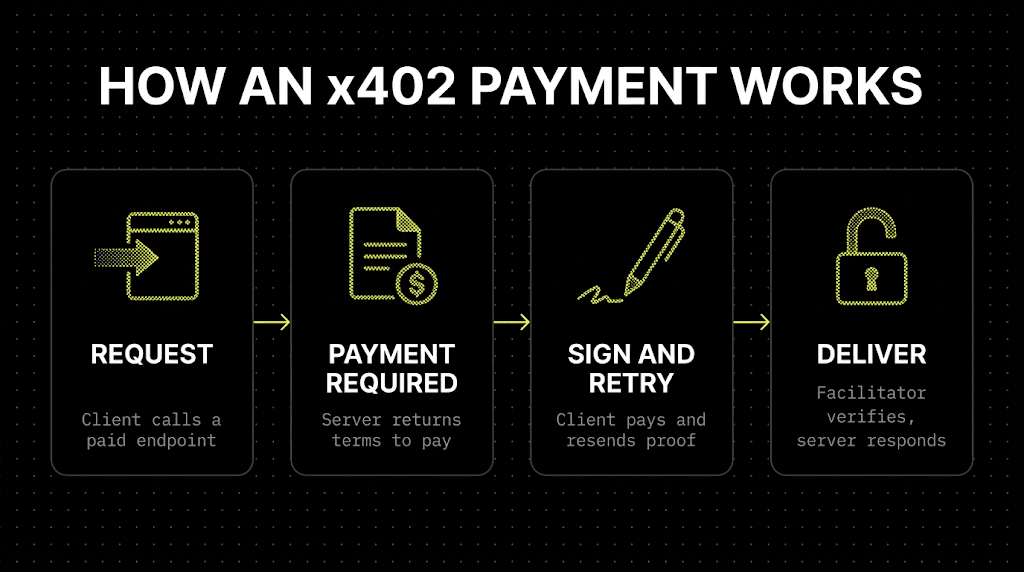
Premium research feeds require verified payment and immediate content delivery. The x402 protocol solves this by embedding payment requirements directly into the HTTP standard. When a client requests data, the server responds with a 402 Payment Required status code, signaling that payment is necessary before the payload is released.
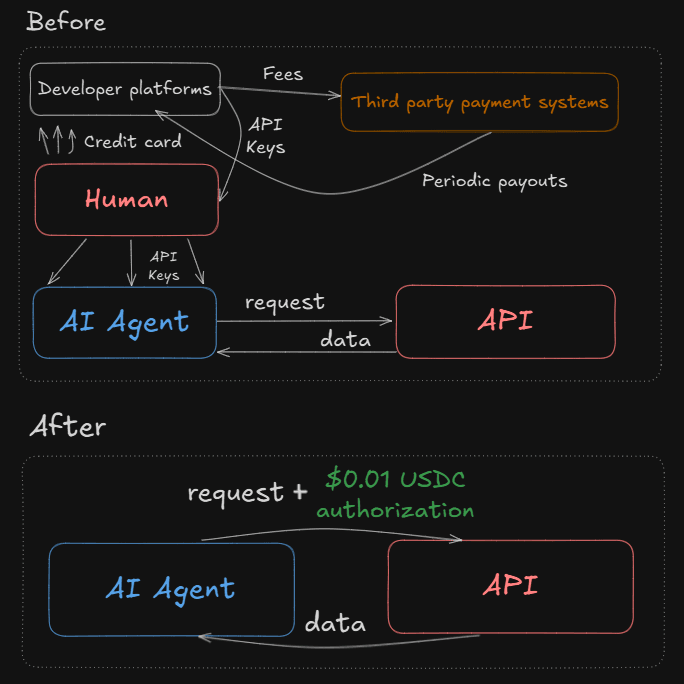
This approach shifts the burden of trust from the consumer to the protocol itself. Instead of relying on manual invoices or third-party billing aggregators, the endpoint enforces compliance through cryptographic proof. For premium research, this means every API call is tied to a specific transaction, creating an immutable audit trail for high-value data streams.
Infrastructure providers are increasingly integrating x402 into their payment layers. According to the x402 ecosystem documentation, the protocol is backed by major cloud platforms and developer infrastructure teams building the next payment layer for the internet. This support ensures that endpoints can handle the transactional overhead without degrading the speed of data retrieval.
The primary advantage for research feeds is the elimination of subscription friction. Users pay per request or through micro-subscriptions that settle instantly on-chain. This model aligns costs directly with usage, making it ideal for high-frequency data queries where flat-rate subscriptions often lead to over-provisioning or access bottlenecks.
Premium research endpoint choices that change the plan
When selecting a 2026 x402 endpoint for premium research, the decision hinges on balancing latency, data depth, and payment friction. Unlike standard HTTP endpoints, these services require explicit micro-transaction handling, which introduces unique infrastructure considerations for high-frequency trading or AI-driven arbitrage agents.
The choice often comes down to whether you prioritize raw speed or comprehensive data scope. Below is a comparison of common endpoint types to help you evaluate the tradeoffs.
| Endpoint Type | Latency | Data Scope | Cost Structure |
|---|---|---|---|
| Real-time Tick Data | <10ms | Limited fields | Per-request |
| Historical OHLCV | 100-500ms | Full history | Per-query |
| Order Book Depth | 50-100ms | Full L2/L3 | Subscription |
| Alternative Data | 1-5s | Unstructured | Per-record |
Real-time tick data offers the lowest latency but charges per request, which can escalate costs during high-frequency trading sessions. Historical OHLCV endpoints are more cost-effective for backtesting but introduce slight delays. Order book depth services typically require subscriptions due to the high bandwidth required to maintain full L2/L3 visibility. Alternative data sources, such as sentiment or satellite imagery, are less time-sensitive but charge per record, making them suitable for daily analysis rather than intraday execution.
For most premium research workflows, the optimal strategy involves hybridizing these endpoints. Use real-time tick data for execution triggers and historical or alternative data for context. Always test the endpoint's rate limits and payment confirmation speed before integrating it into your production environment, as x402 transactions must settle before data is released.
Choose the right x402 endpoint for your research feed
Selecting an endpoint isn’t just about picking a URL; it’s about matching the payment layer to your data latency and budget. The x402 protocol enables instant blockchain payments over HTTP using the 402 "Payment Required" status code, but the infrastructure behind that code varies significantly between providers [[src-serp-2]].
A premium research feed demands low-latency responses and high throughput. If you choose an endpoint optimized for batch processing, you’ll miss real-time market signals. Conversely, picking a high-frequency trading endpoint for historical data analysis wastes resources. This framework helps you align your infrastructure with your specific research needs.
Ensure the endpoint supports your preferred payment network. x402 is backed by various payment networks and cloud platforms [[src-serp-1]]. If your research firm operates on Ethereum, verify the endpoint handles ERC-20 tokens seamlessly. For cross-chain research, look for multi-network support to avoid fragmentation in your data pipeline.
Premium research feeds often require sub-second response times. Check the endpoint’s documented latency metrics. If you’re building a real-time arbitrage bot, an endpoint with high overhead will destroy your edge. Look for endpoints that prioritize speed over batch processing capabilities.
Understand the pricing model. Some endpoints charge per request, while others offer subscription tiers. For high-volume research, a flat-rate tier might be more economical. Also, check rate limits to ensure the endpoint can handle your peak load without throttling your data feed.

Before committing, run a test with a small, representative dataset. Measure response times, error rates, and data accuracy. This proof-of-concept step prevents costly integration failures later. Use a TechnicalChart to visualize the latency distribution during your test.
Identify Weak Options and Misleading Claims
Premium research feeds often rely on x402 endpoints to gate high-value data, but not all integrations are built for reliability. The x402 protocol enables instant blockchain payments over HTTP using the 402 "Payment Required" status code, yet many providers fail to implement this correctly for enterprise-grade workloads. When evaluating vendors, focus on infrastructure robustness rather than marketing promises.
The Latency Trap
Many endpoints claim sub-second settlement but suffer from network congestion during peak hours. This latency breaks real-time trading algorithms that depend on immediate data access. Verify that the provider uses a low-latency blockchain layer or off-chain settlement mechanisms that sync instantly. If the documentation does not specify the underlying chain or consensus mechanism, assume the latency is unacceptable for premium research.
The Verification Gap
A common mistake is assuming that a successful 402 response guarantees data integrity. Some providers return the data alongside the payment receipt but do not cryptographically sign the payload. This allows for potential data tampering or replay attacks. Ensure the endpoint returns a signed hash of the data bundle. Without this verification step, you are trusting the provider’s honesty rather than mathematical proof.
The Hidden Rate Limit
Premium feeds often advertise unlimited access but enforce strict rate limits on the x402 endpoint itself. These limits are rarely disclosed in the main pricing table but are buried in the API documentation. Check the Retry-After header behavior and the maximum requests per second. If the provider does not clearly state these limits, they may throttle your queries during market volatility, leaving you without critical data when you need it most.
X402 endpoints for premium research feeds strategy: what to check next
Before committing infrastructure to the x402 protocol, address the practical friction points that break autonomous data pipelines. This protocol embeds payment directly into the HTTP 402 "Payment Required" status code, enabling instant blockchain settlements for API access without traditional merchant accounts or recurring billing logic [src-serp-2].
How do I handle rate limits with per-request billing?
X402 endpoints typically process payments atomically per request. This means your research feed must be configured to handle a 402 response, trigger a payment transaction, and then retry the request. Unlike subscription APIs that block access after a threshold, x402 allows granular control where each data pull is a discrete transaction, preventing overage surprises but increasing latency per call.
Can AI agents use x402 without human intervention?
Yes, but the agent requires a funded wallet and automated signing logic. The protocol is designed for agentic commerce, where an AI research bot can autonomously pay for arbitrage data or premium market signals using stablecoins like USDC [src-serp-4]. You must implement error handling for failed blockchain confirmations, as network congestion can delay data delivery critical for time-sensitive trades.
What is the integration complexity for existing HTTP clients?
Integration is straightforward if you use a facilitator like Thirdweb or Coinbase Developer Platform (CDP) [src-serp-3, src-serp-5]. These tools abstract the blockchain complexity, allowing you to wrap existing endpoints with x402 middleware. The primary effort lies in configuring your API to return the correct 402 status and payment instructions, rather than rewriting your core data logic.
Is x402 suitable for high-frequency research feeds?
X402 is best for mid-to-high value research queries where the cost of the data exceeds the transaction fee. For high-frequency, low-latency feeds, the blockchain confirmation time may introduce unacceptable lag. Consider using x402 for batched daily reports or on-demand deep dives, while reserving real-time tick data for traditional WebSocket or subscription-based HTTP streams.
No comments yet. Be the first to share your thoughts!