Why agents need x402 endpoints
Current AI agents operate in a friction-heavy environment. When an agent needs real-time financial data, it encounters a paywall that requires human interaction to bypass. Standard HTTP status codes like 401 (Unauthorized) or 403 (Forbidden) signal that access is denied, but they do not provide a standardized mechanism for the agent to pay its way in. This creates a bottleneck where autonomous workflows stall because the agent cannot negotiate or complete a transaction without human intervention.
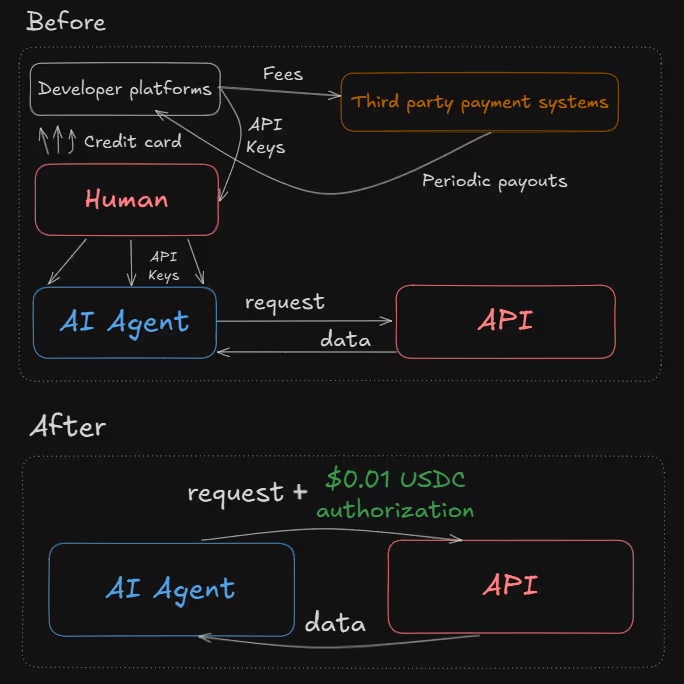
x402 solves this by redefining the HTTP 402 status code as a payment protocol. Instead of simply blocking a request, the server returns a 402 response containing a payment instruction. This instruction tells the agent exactly what to pay and to whom. Once the agent executes the payment, it receives the data. This turns API access into a self-service commodity, allowing agents to purchase premium research feeds, stock quotes, or news updates with zero human oversight.
For developers building endpoints for premium research feeds, this means shifting from traditional authentication tokens to payment-aware responses. The x402 standard provides the open protocol layer that makes this possible. By embedding payment logic directly into the HTTP response, you enable a new class of agentic commerce where data providers can monetize access automatically, and agents can consume data as a routine part of their workflow.
x402 is not just a new status code; it is the protocol layer that allows AI agents to pay for data without user intervention.
This capability is foundational for financial services, where data latency and accuracy are critical. As noted in recent industry analyses, x402 is redefining autonomous payments by allowing agents to handle complex financial transactions seamlessly. By adopting x402 endpoints, you are not just adding a payment feature; you are enabling your data to be consumed by the next generation of autonomous agents.
Learn more about the x402 introduction to understand the technical specifications for implementation.
Architecture for premium data feeds
Building x402 endpoints for premium research feeds requires a shift from traditional API authentication to transaction-based access. Instead of relying solely on API keys, the system uses HTTP 402 responses to gate data behind crypto payments. This architecture ensures that AI agents and human buyers can only access high-value datasets after settling the fee, creating a trustless commerce layer for sensitive information.
The technical stack typically involves three main components: the seller’s backend, the x402 facilitator, and the buyer’s agent. The facilitator (often Thirdweb or Coinbase CDP) handles the payment routing and verification, while the seller’s API enforces the logic. This separation allows developers to focus on data integrity while the protocol manages the financial settlement.
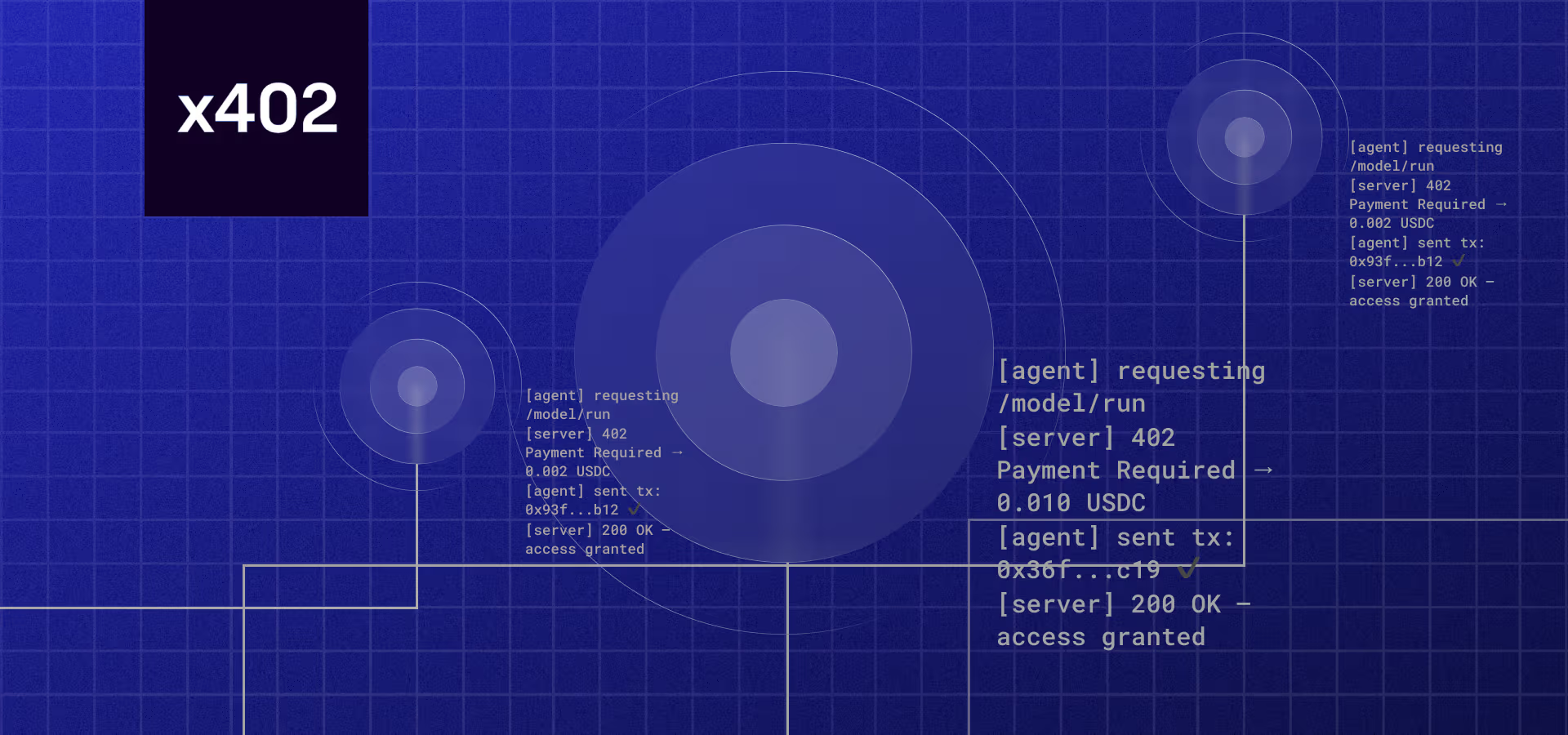
The seller integrates a facilitator like Thirdweb’s x402 middleware. This component acts as the bridge between your API and the blockchain. It listens for incoming requests and validates that a valid payment transaction has been recorded on-chain for the specific resource being accessed. This step ensures that the payment logic is standardized and secure.
Your API endpoints must be configured to return an HTTP 402 status code when a request lacks valid payment credentials. Unlike a standard 401 Unauthorized, the 402 response includes a Pay-To header. This header contains the payment details, such as the required amount, the recipient’s wallet address, and the preferred cryptocurrency (e.g., USDC). This signals to the buyer’s agent that payment is required to proceed.
Once the buyer’s agent submits the payment transaction hash, your API verifies the on-chain confirmation. Upon successful validation, the facilitator grants access to the premium data. This flow allows AI agents to autonomously discover, purchase, and consume research feeds without human intervention, enabling real-time data commerce.
This architecture transforms how data is monetized. By embedding payment verification directly into the HTTP protocol, you eliminate the need for complex billing systems or subscription management platforms. The result is a streamlined, automated pipeline for delivering premium research feeds to AI agents and enterprise buyers.
| Feature | Traditional API | x402 Endpoint |
|---|---|---|
| Payment Model | Subscription / API Key | Pay-per-use / Transaction |
| Verification | Server-side token check | On-chain transaction hash |
| Agent Compatibility | Limited / Manual | Native / Autonomous |
Integrating USDC payments on Base
To make x402 endpoints viable for premium research feeds, the settlement layer must handle micropayments without eroding margins through network fees. Base is the preferred chain for this architecture because it offers the low gas costs and high throughput required for instant, machine-to-machine commerce. Unlike Ethereum mainnet, where transaction fees can exceed the value of a single data query, Base allows you to charge fractions of a cent while maintaining profitability.
When a buyer or AI agent requests data, the x402 protocol intercepts the HTTP response. If payment is missing, it returns a 402 Payment Required status with a proof-of-payment or payment link. Once the buyer sends USDC on Base, the settlement is near-instant. This removes the latency and friction of traditional banking rails, enabling real-time access to high-value research data. The combination of HTTP-native signaling and on-chain settlement creates a seamless checkout experience that feels like a standard API call but functions as a secure financial transaction.
Common integration mistakes to avoid
Building x402 endpoints for premium research feeds requires precision. The protocol is strict, and small oversights can break agent connectivity or leave your revenue on the table. These are the most frequent pitfalls we see during integration audits.
Improper HTTP header handling
The Pay-to-Use header is non-negotiable. Agents send it to declare intent and payment proof. If your endpoint ignores it or parses it incorrectly, the request fails silently or returns a standard 200 OK, which confuses the agent’s retry logic. Always validate the header’s presence and structure before processing the payload. Treat missing headers as a 402 Not Paid response, not a 400 Bad Request, to maintain protocol clarity.
Facilitator misconfiguration
Your facilitator acts as the escrow and routing layer. If it’s misconfigured, payments may never reach your wallet, or agents may fail to retrieve the necessary payment proofs. Ensure your facilitator endpoint matches the one registered in your x402 manifest. A mismatch here is a common cause of "payment received but data not delivered" errors. Double-check the URL and authentication tokens in your facilitator settings.
Failing to handle edge cases in agent authentication
Agents are not humans. They don’t click buttons or fill out forms. They send automated requests. If your endpoint expects human-like interactions or complex multi-step logins, you will lose all agent traffic. Keep authentication simple: use API keys, signed JWTs, or direct wallet signatures. Test your endpoint with a basic curl command or a simple script before exposing it to the full agent ecosystem. If it doesn’t work with a raw HTTP request, it won’t work with an AI agent.
Verify your x402 endpoint works
Testing your x402 endpoint for premium research feeds is the final checkpoint before going live. You need to ensure that the HTTP 402 payment flow functions exactly as specified: the endpoint must reject unpaid requests and release data only after a valid USDC transaction is settled.
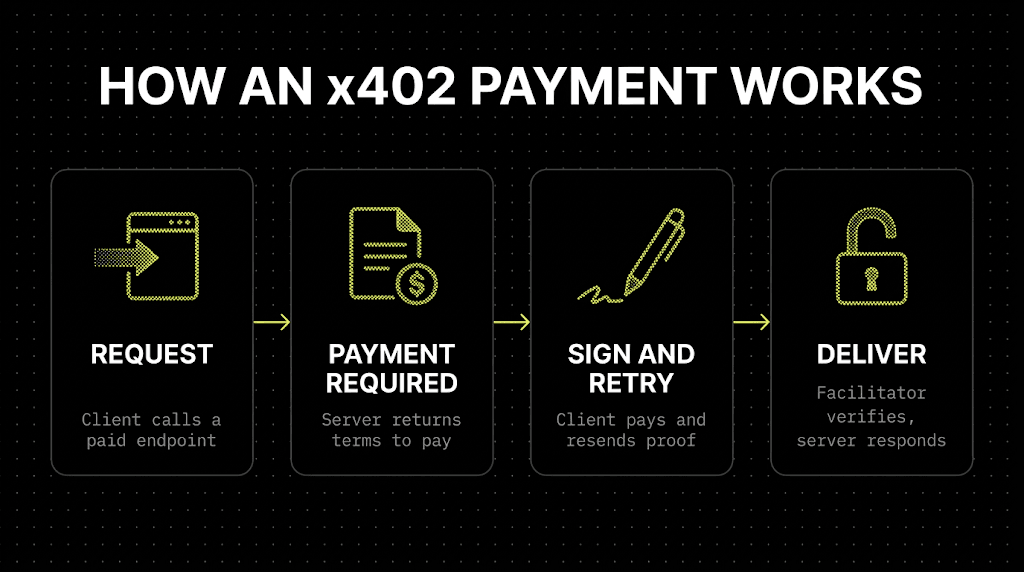
Start by sending a request to your endpoint without any payment credentials. A properly configured x402 endpoint should immediately respond with a 402 Payment Required status code. This confirms that the server is correctly intercepting unpaid traffic and enforcing the payment wall.

Next, simulate a successful transaction using a test wallet. Send the required USDC to the address specified in your endpoint’s response. Once the blockchain confirms the settlement, your system should generate a valid payment receipt (usually a signed JWT or transaction hash). Ensure your endpoint accepts this receipt without errors.
Finally, resend the request including the valid payment receipt. The endpoint should process the credentials and return the premium research data. If the data remains locked or the request is rejected despite valid payment, check your facilitator integration and signature verification logic.
A working x402 endpoint acts like a turnstile: it only opens when the fare (payment) is verified. If the turnstile sticks or opens without payment, the system is broken. Use the x402 quickstart guide to cross-reference your implementation against official seller standards.
No comments yet. Be the first to share your thoughts!