The x402 payment standard for data
For years, API access has been gated by static keys and enterprise contracts. That model works for human developers who can manage secrets and invoices, but it breaks down for autonomous AI agents. These systems need to buy data in real-time, often in micro-transactions, without human intervention. This is where the 2026 x402 endpoints change the infrastructure for premium research feeds.
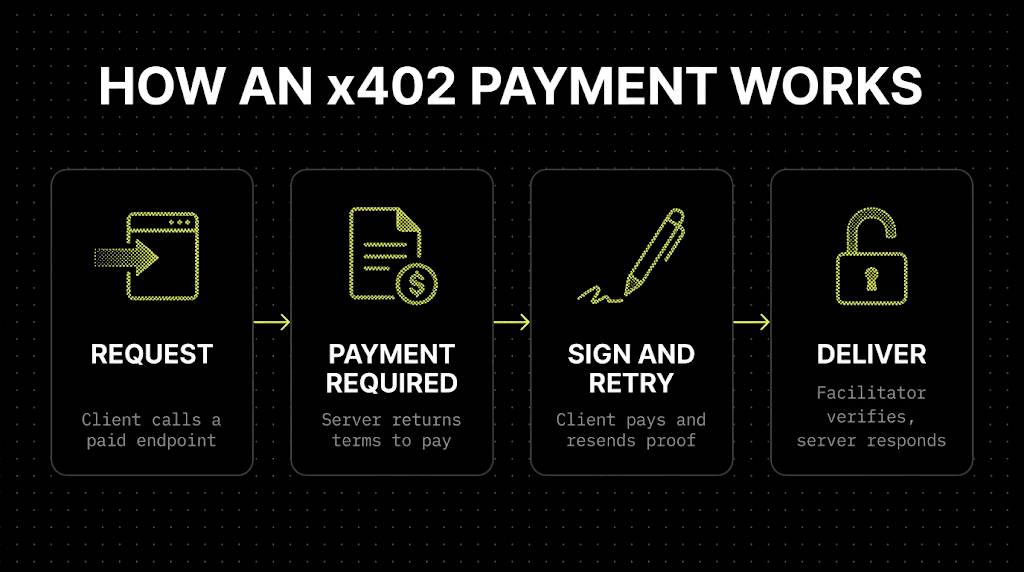
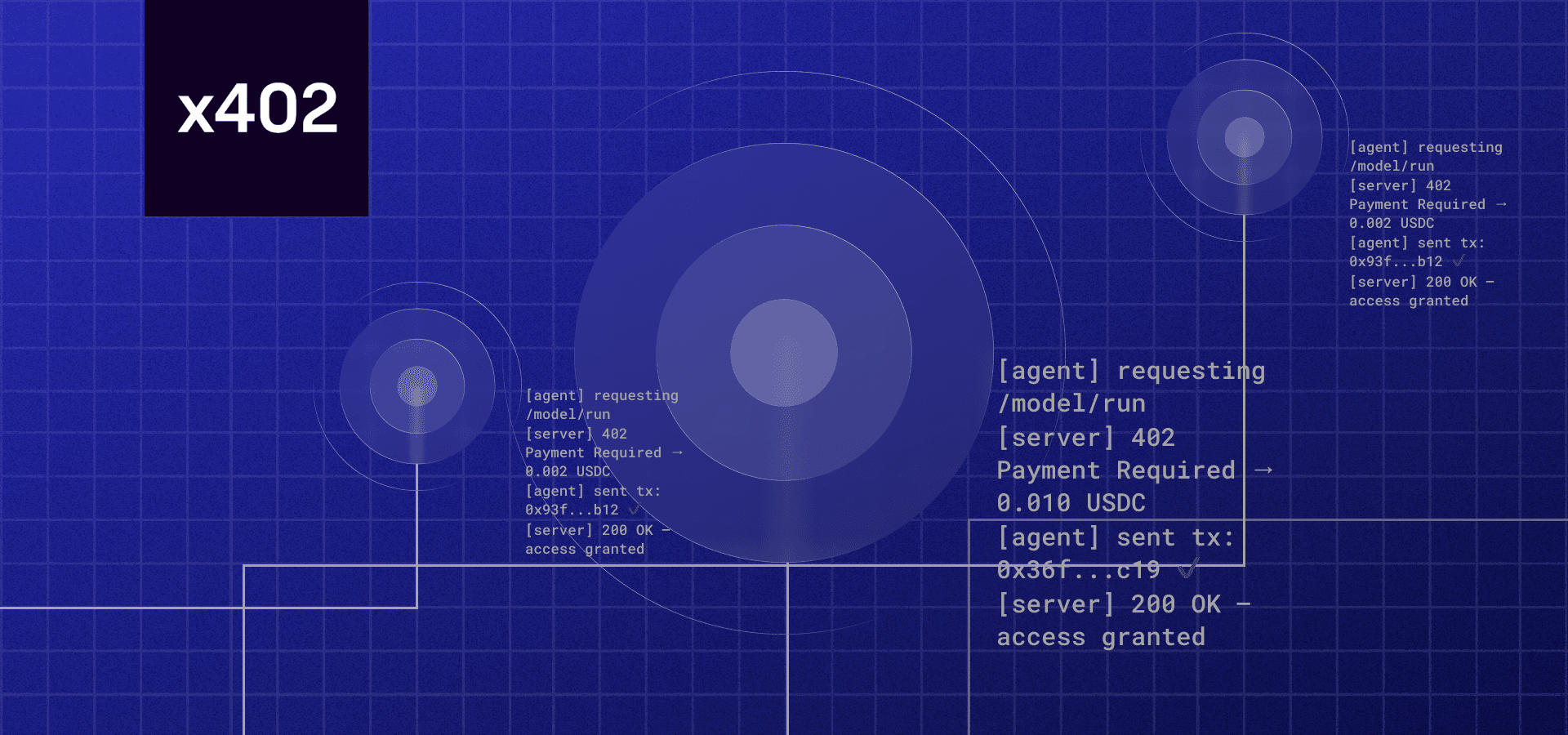
x402 is an open payment standard that uses the HTTP 402 "Payment Required" status code to enable direct, blockchain-based payments over standard web requests. Instead of a separate billing portal or a pre-funded wallet managed by a human, the payment logic is embedded directly into the API response. This allows AI agents to verify a transaction and receive data in a single, atomic step.
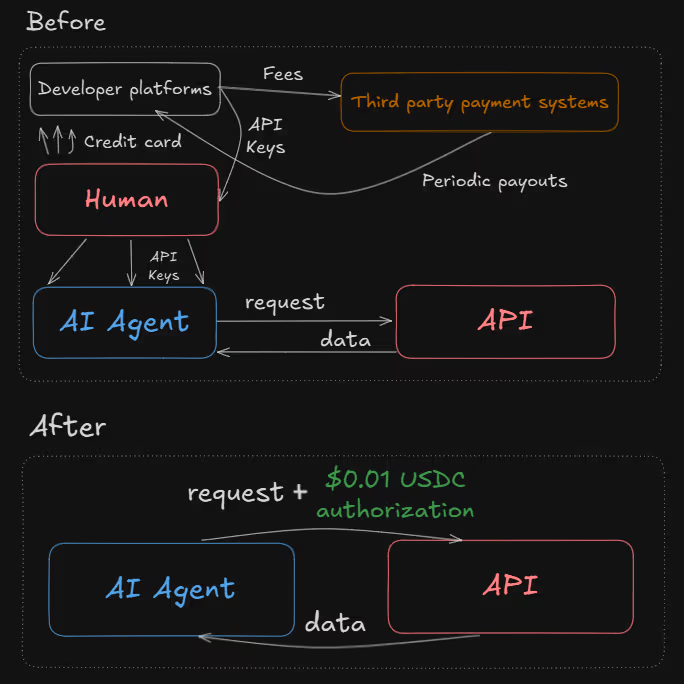
This distinction is critical for premium research feeds. Traditional API keys are easily shared or leaked, leading to revenue loss. x402 ties access to a verified on-chain transaction. For providers of high-value data, this means a new kind of endpoint: one that is both a data source and a payment processor. It shifts the burden of payment verification from the server to the protocol layer, creating a more efficient market for machine-to-machine data exchange.
Strategy for premium research monetization
Premium research feeds represent a natural fit for x402 endpoints because they solve the friction of agent consumption. Traditional subscription models force agents to pay for access regardless of usage, creating wasted capacity and billing disputes. By shifting to pay-per-query pricing, you align costs directly with the value delivered to the consuming agent.
This approach transforms research feeds from static products into dynamic services. Instead of selling a license to a database, you are selling the result of a specific query. This distinction matters for infrastructure design. Your endpoint must validate the payment before executing the expensive database lookup, ensuring that only paid requests trigger the computational cost.
The technical implementation relies on HTTP-based authentication. As noted in official documentation from Coinbase and AWS, integrating x402 allows your API to automatically handle payment verification for any HTTP-based application. This means your existing research infrastructure can remain largely unchanged, with x402 acting as the secure gatekeeper for monetization.
By adopting this strategy, you open your data to a new class of buyers: autonomous agents. These agents operate 24/7 and require seamless, machine-to-machine payment flows. x402 provides the standard for these interactions, removing the need for manual invoicing or complex billing integrations. The result is a more efficient market where data providers and AI agents can transact with minimal friction.
Infrastructure for x402 endpoints
Building an x402 endpoint for premium research feeds requires shifting from traditional authentication to a payment-first architecture. Instead of API keys or subscription gateways, the endpoint validates a cryptographic signature proving a USDC payment occurred. This approach allows AI agents and automated buyers to access data without manual invoicing, treating data as a programmable commodity.
The implementation relies on a facilitator to bridge HTTP requests with blockchain state. You can use platforms like Thirdweb or Coinbase CDP to handle the complexity of signing transactions and verifying receipts. These services provide libraries that integrate directly into your backend, allowing you to attach payment logic to existing API routes without rewriting your entire infrastructure.
Configure your development environment with the chosen facilitator’s SDK. Whether using Thirdweb’s x402 facilitator or Coinbase CDP, initialize the client with your wallet credentials and the specific USDC contract address on your target chain. This step ensures your backend can generate and verify the necessary cryptographic proofs.
Wrap your existing research data endpoint with a payment verification middleware. Before returning the premium dataset, the middleware checks for a valid x402 signature in the request headers. If the signature is missing or invalid, the endpoint returns a 402 Payment Required status, effectively gating the data behind the payment.
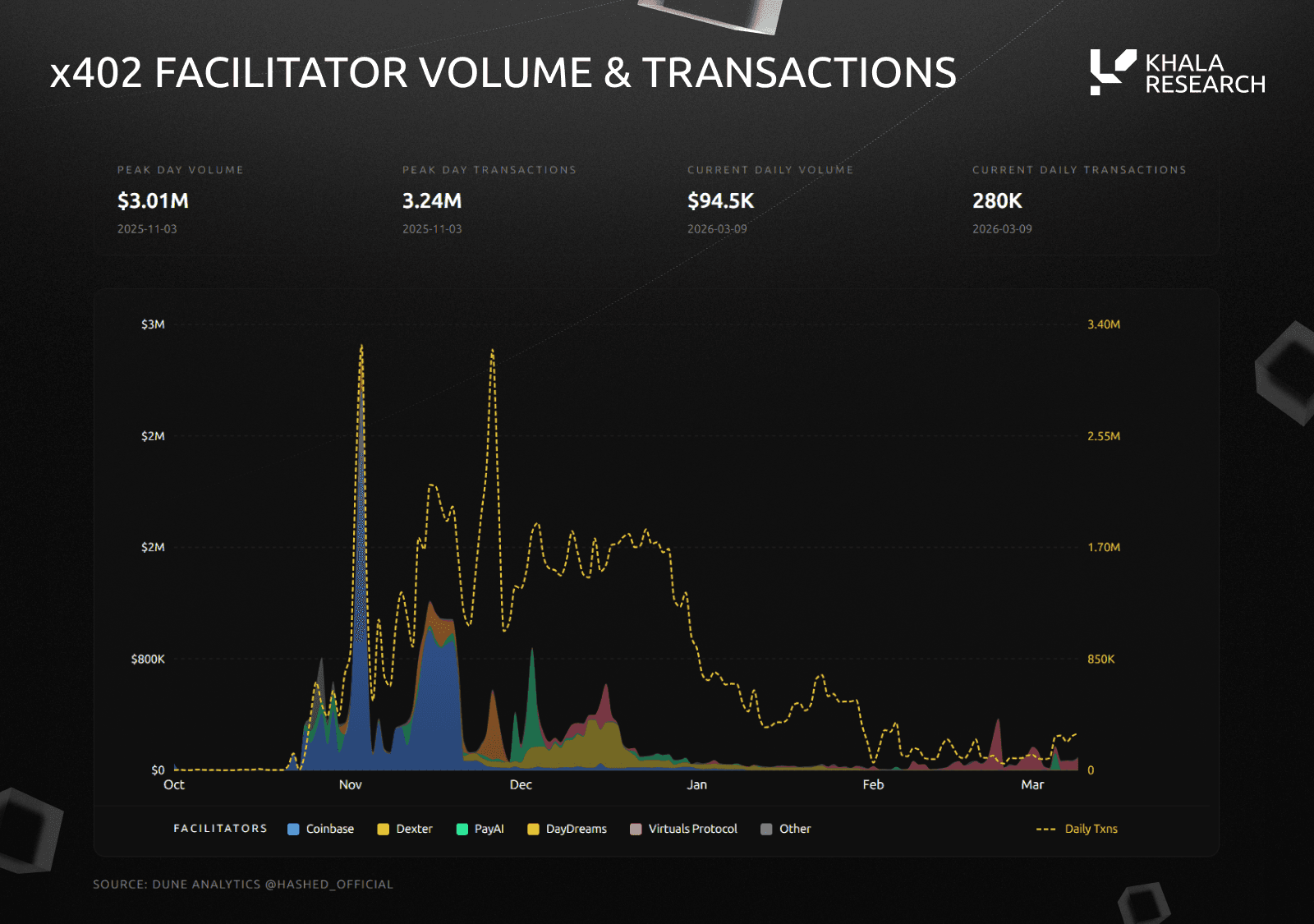
Implement logic to validate that the USDC transfer is confirmed on-chain. While facilitators often handle real-time verification, you should add a fallback check for finality to prevent race conditions. Once verified, release the high-value research data to the requester, completing the automated transaction loop.
This infrastructure turns your research feed into a self-liquidating asset. By leveraging stablecoins like USDC, you eliminate currency risk and enable micro-transactions that are economically viable for automated agents. The result is a scalable, permissionless distribution channel for your data.
For detailed implementation guides, refer to the Coinbase CDP documentation or the x402 protocol specifications. These resources provide code snippets and best practices for handling edge cases in production environments.
The Rise of Agent Commerce
The market for autonomous AI agents is shifting from experimental pilots to active infrastructure. Traditional API keys and OAuth flows were built for human interactions, creating friction when scaled to machine-to-machine commerce. Agents cannot easily manage session tokens or navigate multi-step human verification processes required by legacy systems.
x402 endpoints solve this by embedding payment logic directly into the HTTP protocol. This allows premium research feeds to function as open markets where agents can purchase data access instantly without manual intervention. The shift is not just about automation; it is about creating a liquid market for high-value data where the buyer and seller are both software entities.
Authentication Comparison
The difference between legacy access and x402-enabled feeds is structural. Legacy systems require complex credential management, while x402 treats data access as a simple transactional endpoint.
| Feature | Legacy API (Keys/OAuth) | x402 Endpoint |
|---|---|---|
| Auth Model | Session-based, manual | HTTP-native, automated |
| Agent Readiness | Low, requires wrappers | High, native support |
| Payment Flow | Off-chain, batched | On-chain, per-request |
| Scalability | Limited by token limits | Infinite, micro-transactions |
This transition enables a new class of financial infrastructure. As noted in the x402 whitepaper, the standard is designed to let web services autonomously pay for API access, data, and digital services. AWS has also highlighted how this redefines autonomous payments in financial services by enabling these payments on any HTTP-based application [1]. The result is a market where premium research data is no longer a static subscription but a dynamic, real-time commodity.
Implementing x402 Endpoints for Premium Research Feeds
Setting up x402 endpoints for premium research feeds requires shifting from passive API access to active, machine-readable payments. The goal is to allow AI agents to pay per request or per data row without human intervention.
Start by integrating the x402 protocol into your existing API layer. Follow the Coinbase Developer Documentation for the seller quickstart, which covers the necessary HTTP headers and response codes. Your endpoint must return a 402 Payment Required status when payment is missing, along with a PaymentUrl header directing the agent to a valid payment link.
Security and reliability are critical for premium data. Use USDC for transactions to minimize volatility risk, as shown by the live price context below. Ensure your payment verification logic is robust: only release data after the transaction is confirmed on-chain. This prevents replay attacks and ensures your research feed remains a trusted, high-value asset.
No comments yet. Be the first to share your thoughts!