Why agents need x402 payments
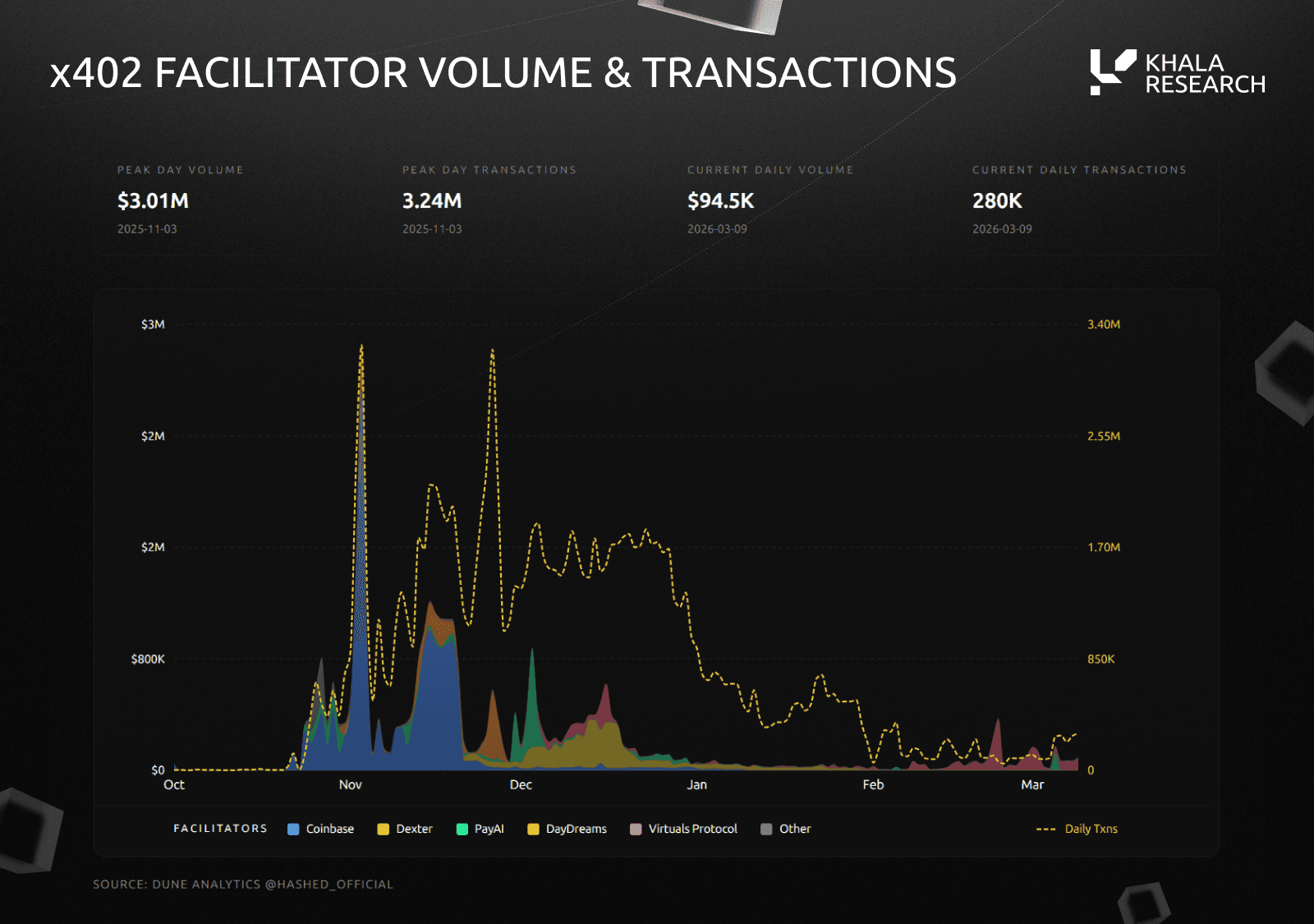
AI agents operate at machine speed, but traditional payment rails move at human speed. Processing a credit card charge requires token validation, fraud checks, and often manual approval. These frictions are fatal for micropayments. If an agent needs to pay $0.05 for a single data point, the transaction fee alone exceeds the value of the data.
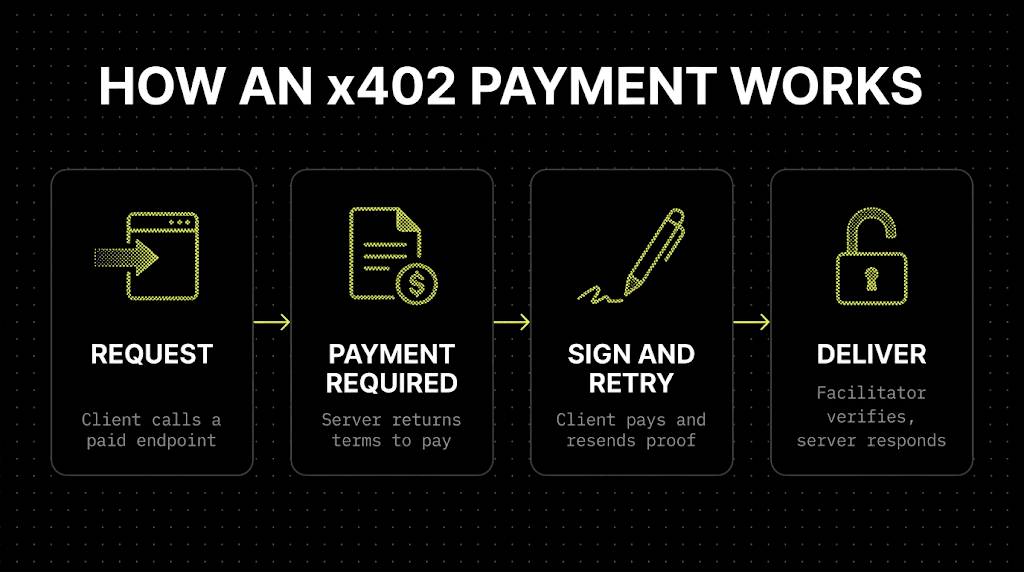
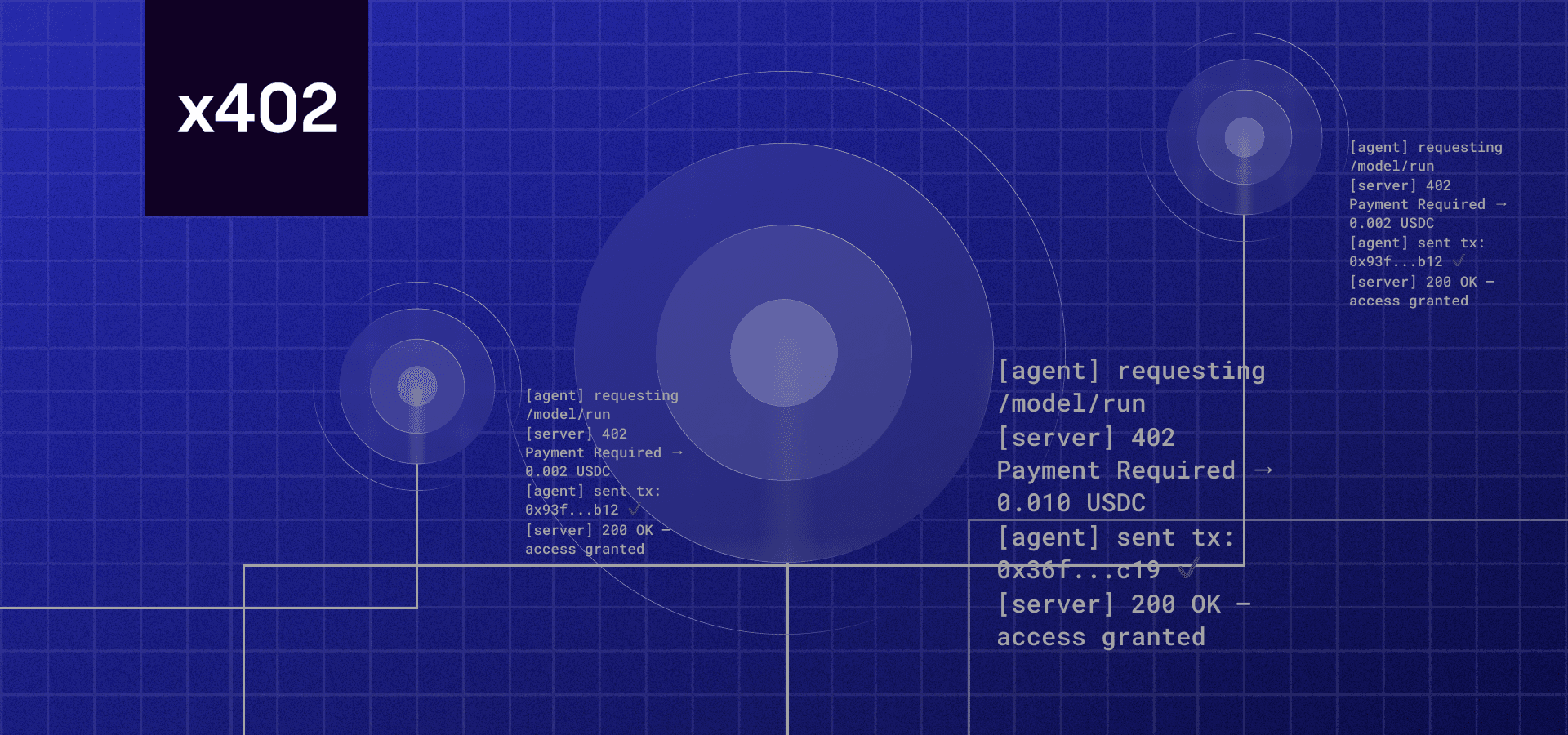
This is where x402 becomes essential. It is an open payment standard that allows AI agents to pay for data directly using stablecoins like USDC. Instead of routing payments through a merchant of record, agents use HTTP 402 status codes to facilitate machine-to-machine (M2M) transactions. The agent sends a request; the server responds with a 402, prompting the agent to sign a transaction and send the funds before granting access.
For premium research feeds, this model removes the bottleneck of subscription management. Agents can buy exactly what they need, when they need it, without setting up recurring billing or managing API keys that expire. This shift enables a new economy where data is treated as a liquid asset rather than a gated resource.
The standard is gaining traction as the primary way to monetize AI-accessible data. Developers building x402 endpoints can use tools like Thirdweb's x402 facilitator to handle the payment logic, ensuring that access is granted only after the transaction is confirmed on-chain. This creates a seamless, automated loop for data consumption.
Designing the premium data endpoint
To build a premium research feed with x402, you need an endpoint that treats payment as a prerequisite for data delivery. Unlike traditional API keys that gate access via authentication, x402 gates access via settlement. The buyer sends a payment with the request, and the server validates that payment before returning the research data.
This architecture shifts the trust model. You don't need to worry about subscription fraud or unpaid invoices. The data is only released if the transaction is confirmed on-chain. This makes it ideal for high-value, low-frequency research where the cost of data access should match the value of the insight.
Start by integrating the Coinbase CDP SDK into your backend. This tool handles the complex task of generating payment requests and verifying transactions. Configure it to accept USDC on a supported network like Base, which offers the low fees necessary for micro-payments. This setup ensures that your endpoint can accept payments from both human users and AI agents.
Structure your research data as a JSON response. Include the core metrics, timestamps, and source attribution. Keep the payload lean to minimize bandwidth costs. Since x402 transactions are paid per request, efficient data transfer directly impacts your profit margins. Define clear error codes for invalid payments so clients can retry with correct credentials.
Before processing the request, check the x-payment header for a valid transaction hash. Use the CDP SDK to verify that the payment was received and confirmed on-chain. If the payment is missing or invalid, return a 402 Payment Required status. This step is critical; it ensures that no data leaks out without a corresponding settlement.

Once payment is verified, return the research data in the response body. Include metadata about the payment in the headers for auditing purposes. This transparency helps buyers track their spending and provides you with a clear record of revenue. The entire process should take less than a second to maintain a smooth user experience.
This setup creates a self-sovereign data economy. Your endpoint doesn't just serve information; it facilitates a direct exchange of value for insight. By leveraging x402, you remove the friction of traditional billing, making it easier for AI agents and developers to access your premium research feeds.
Integrating Stablecoin Settlement
The HTTP 402 status code only signals that payment is required; it doesn't handle the transaction itself. To actually settle payments in USDC on Base, you need a facilitator to bridge the gap between your API and the blockchain. For most premium research feeds, using a dedicated provider like the Coinbase Developer Platform (CDP) or Thirdweb is the most practical path. These tools abstract away the complex wallet management and gas fee logic, allowing you to focus on the data access layer.
Using Coinbase CDP for Automated Payments
The Coinbase CDP provides a direct integration path for x402, designed specifically for sellers who want to accept crypto payments without building custom smart contracts. The process begins by configuring your API to return a 402 Payment Required status when a user attempts to access protected research data. The response must include a Pay link pointing to a payment handler URL you control.
When a consumer or AI agent follows that link, the CDP facilitates the transfer. You don't need to manage private keys or track on-chain confirmations manually. The CDP handles the transaction, verifies the USDC transfer on Base, and then triggers a webhook to your server. Once your server confirms the payment, it can issue a short-lived token or session cookie that grants the buyer access to the premium feed. This flow ensures that payment precedes data delivery, which is the core promise of the x402 protocol.
Why Base for Micropayments?
Choosing Base for settlement isn't just about trendiness; it's about economics. Premium research feeds often involve small, frequent transactions. Ethereum Mainnet gas fees would make a $0.01 data query impossible to process profitably. Base, being an Optimistic Rollup, offers significantly lower transaction costs, making micropayments viable. The stability of USDC further reduces risk, ensuring that the value you receive matches the value promised at the time of the API call.
Implementation Checklist
Before going live, ensure your integration handles edge cases. If a transaction fails or is reverted on-chain, your webhook should not grant access. Conversely, if a buyer retries a request before the blockchain confirms the payment, your system must be idempotent to prevent double-charging or premature access. The Coinbase CDP documentation provides detailed examples of these webhook handlers, which you can adapt for your specific research feed architecture.
Pricing strategies for research data
Setting a price for premium research feeds requires balancing the cost of data aggregation against the value delivered to autonomous agents. Unlike human users who browse freely, AI agents operate on strict budget constraints, making micropayment thresholds and value-based pricing essential for adoption.
You can structure your pricing using three primary models. The first is per-request billing, which charges a fixed amount (e.g., $0.01) for each API call. This is ideal for high-frequency, low-complexity queries. The second is subscription access, where agents or developers pay a monthly fee for unlimited or capped access, suitable for steady-state monitoring. The third is tiered access, which differentiates data latency or depth, allowing buyers to choose between real-time premium data and delayed standard feeds.
| Pricing Model | Cost Structure | Best Use Case | Agent Behavior |
|---|---|---|---|
| Per-Request | $0.01 - $0.05 per query | Ad-hoc analysis, one-off research | Pauses for payment confirmation |
| Subscription | $10 - $50 monthly | Continuous monitoring, arbitrage scanning | Runs autonomously without friction |
| Tiered Access | Base fee + usage overage | Mixed workloads, scalable operations | Switches tiers based on urgency |
When implementing these models, consider the workflow impact. An AI research agent scanning for arbitrage opportunities may need to pause and wait for a human to authorize a payment if the per-request cost exceeds its micro-budget. Conversely, a subscription model allows for seamless, uninterrupted data flow, which is critical for time-sensitive financial decisions.
For implementation, leverage x402-compliant gateways that handle micropayments automatically. This reduces the cognitive load on your product team and ensures that agents can access premium data without manual intervention. The goal is to make the payment process invisible to the agent, treating it as just another step in the data retrieval pipeline.
Testing and verifying agent payments
Before you hand over sensitive research data, you need to be certain the endpoint is enforcing the x402 standard correctly. A misconfigured endpoint can leak data to unpaid requests or, worse, fail to recognize valid payments. The following checklist ensures your endpoint behaves like a proper gatekeeper: it rejects unpaid requests with a 402 status, accepts valid transactions, and releases data only after verification.
Send an initial GET request to your endpoint without any payment credentials. The x402 specification requires the server to respond with an HTTP 402 status code. This response must include a Paywall header containing the payment_uri and the required price. If you receive a 200 OK or a 404 instead, your endpoint is not yet compliant with the standard.

Use the payment_uri from the 402 response to submit a payment using a compatible wallet or agent. Monitor your server logs to ensure the endpoint receives the transaction hash or callback notification. The endpoint should validate the transaction on-chain (or via the relevant L2 bridge) to confirm it matches the price and currency specified in the challenge.

Once the transaction is confirmed, retry the original GET request. This time, include the payment proof (often in the Authorization header or as a query parameter, depending on your implementation). The server must now return a 200 OK with the premium research data. If the data is still withheld or the error persists, your verification logic is likely flawed.

Real-world agents operate under network constraints. Test your endpoint with delayed payments, partial confirmations, and expired tokens. Ensure that the endpoint does not serve data before the required number of block confirmations is met. Additionally, verify that the endpoint rejects requests with insufficient funds or incorrect currency symbols to prevent accidental free access.
By following these steps, you ensure that your premium research feed is secure and compliant. For more details on the x402 specification, refer to the official x402 documentation.
No comments yet. Be the first to share your thoughts!