X402 endpoints premium research limits to account for
Premium research feeds require strict access control. The x402 standard solves this by treating API access like a toll road. When a request hits your endpoint without valid payment credentials, the server returns an HTTP 402 status code. This response includes a payment instruction that tells the agent exactly how to settle the debt.
This constraint is not a bug; it is the core feature. It allows you to scale endpoints without worrying about unauthorized scraping or data leakage. The agent must complete the payment before receiving the actual research data. This creates a direct link between value and access.
For high-stakes market analysis, this mechanism ensures that only paying entities receive real-time data. The system verifies the transaction on-chain or via the payment layer before releasing the payload. This prevents the "free rider" problem where competitors scrape your premium insights without contributing to the infrastructure.
X402 endpoints premium research choices that change the plan
Scaling x402 endpoints for premium research feeds requires balancing latency, cost, and data freshness. Unlike standard API calls, payment-gated endpoints introduce a transaction layer that can slow down initial requests. You must evaluate how these tradeoffs impact your specific use case, whether you are building high-frequency trading signals or quarterly analyst reports.
The following table compares common implementation approaches for x402-gated research endpoints. Use this to weigh the operational overhead against the user experience.
| Factor | Sync Payment | Async Payment | Cached Data |
|---|---|---|---|
| Latency | High (blockchain tx) | Low (once confirmed) | Minimal |
| User Friction | High (wallet pop-up) | Medium (redirect) | None |
| Data Freshness | Real-time | Near-real-time | Stale/Periodic |
| Operational Cost | High (gas/fees) | Medium (listener) | Low (CDN) |
Sync vs. Async Payment Models
Synchronous payments require the client to complete a transaction before receiving data. This ensures immediate access but introduces significant latency due to blockchain confirmation times. For premium research feeds where speed is critical, this can lead to timeout errors or a poor user experience.
Asynchronous models allow the endpoint to return a 402 Payment Required response with payment instructions. The client pays in the background while the server queues the request. Once the transaction is confirmed, the data is delivered. This reduces perceived latency but requires robust queue management and state tracking.
Data Freshness and Caching
Premium research data often loses value over time. Caching responses at the CDN level can reduce costs and improve speed, but it risks serving stale data. For real-time market analysis, caching is generally discouraged unless the data is explicitly labeled as delayed.
If you do implement caching, ensure your x402 endpoint validates the freshness of the cached response against the payment timestamp. This prevents users from bypassing payment by sharing cached URLs or using old tokens.
Operational Overhead
Implementing x402 requires maintaining a payment listener and a database to track payment status. This adds complexity to your infrastructure. You must handle failed transactions, retries, and potential disputes.
For high-volume endpoints, consider using a managed x402 gateway or a specialized payment processor. These services can handle the blockchain interactions, allowing you to focus on delivering the research data itself.
Choose the Next Step in Your x402 Implementation
Scaling x402 endpoints for premium research feeds requires more than just writing code; it demands a structured rollout that balances payment friction with data reliability. The x402 standard simplifies this by embedding payment instructions directly into HTTP responses, but the implementation details determine whether your feed becomes a reliable revenue stream or a technical liability.
Follow this ordered framework to move from a basic endpoint to a production-ready research feed. Each step addresses a specific layer of the agent-commerce infrastructure, ensuring that your premium data flows securely and predictably.
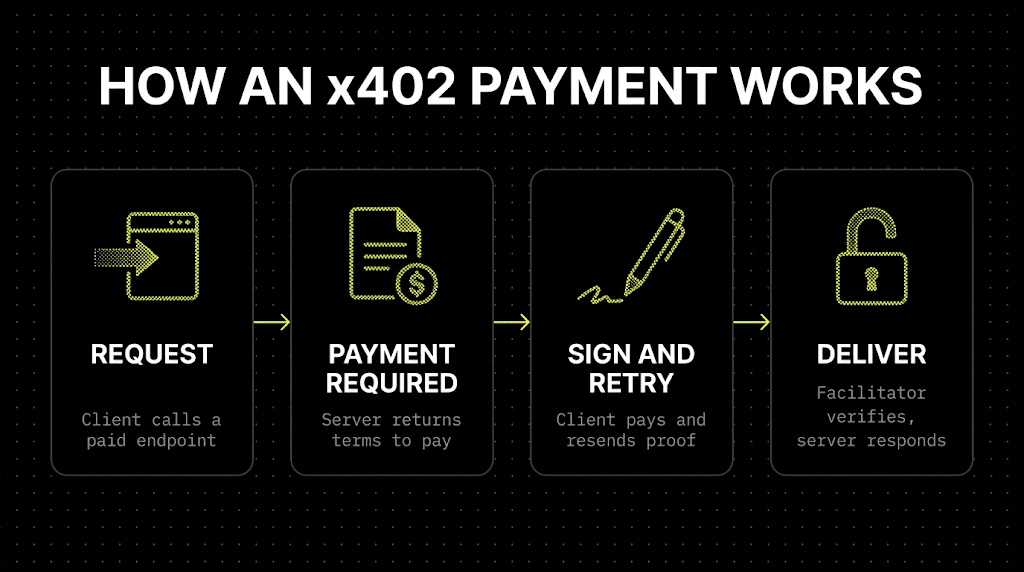
Your endpoint must respond with a 402 Payment Required status code when an unauthenticated or unpaid request arrives. This response should include a Paywall header containing the payment URI and amount. This is the foundational signal that tells the agent wallet to initiate a transaction before accessing the data.
Research agents need a wallet that understands the x402 standard. Ensure your target agents (such as those using LangChain or AutoGen) can parse the Paywall header and execute the payment automatically. Without this integration, the payment flow breaks, and your endpoint returns data to no one.
Once payment is initiated, your server must listen for the confirmation webhook or poll the blockchain for transaction completion. Only after the payment is confirmed should you grant access to the premium research feed. This step prevents "free riding" where agents consume data without paying.
Premium research feeds often involve large datasets. Implement caching for payment receipts and use stateless design patterns to handle concurrent requests. This ensures that your endpoint can scale to thousands of agent queries without becoming a bottleneck during peak market hours.
Before going live, run a series of test transactions using sandbox wallets. Verify that the 402 response is correctly parsed, the payment goes through, and the data is delivered only after confirmation. This proof check ensures your infrastructure is robust against edge cases and network delays.


As an Amazon Associate, we may earn from qualifying purchases.
By following these steps, you transform x402 from a theoretical standard into a working payment infrastructure for your research feeds. This approach minimizes friction for agents while maximizing your revenue potential.
Spotting weak x402 endpoint options
When scaling premium research feeds, not all x402 endpoint implementations are built for volume. Many guides suggest returning a 402 status code with payment instructions, but this approach often breaks under load. The real issue isn't just the HTTP response; it's the latency introduced by waiting for payment confirmation before serving data. High-frequency research feeds require near-instant access, and blocking requests for payment verification creates a bottleneck that defeats the purpose of a premium service.
A common mistake is assuming that every request needs individual payment validation. For high-volume endpoints, this is inefficient and prone to failure. Instead, consider using token-based access or session-based whitelisting for authenticated users. This reduces the number of payment checks and allows your infrastructure to scale more effectively. The goal is to minimize friction for paying users while maintaining strict access control.
Another pitfall is ignoring the difference between one-time payments and subscriptions. Premium research feeds often require recurring access, which means your endpoint must handle subscription status updates in real-time. If your system doesn't sync payment status with access control, you risk either losing revenue or giving away free access. Always verify that your x402 integration supports continuous validation, not just initial payment confirmation.
Finally, don't overlook the importance of clear error messaging. When a request fails, the response should guide the user toward resolution, not just return a generic error. This is especially important for premium services where users expect a high level of support. A well-designed error response can reduce support tickets and improve user satisfaction, making it a small but critical part of your endpoint strategy.
Frequently Asked Questions About x402 Endpoints
How do x402 endpoints handle payments for research data?
x402 operates at the HTTP protocol level rather than relying on traditional web2 payment gateways. When an agent or user requests a premium endpoint without valid credentials, the server returns an HTTP 402 status code. This response includes a Pay-to-Unlock header that specifies the exact payment instruction, such as a USDC transfer address. Once the payment is confirmed on-chain, the client gains access to the data feed.
Can AI agents use x402 for automated research subscriptions?
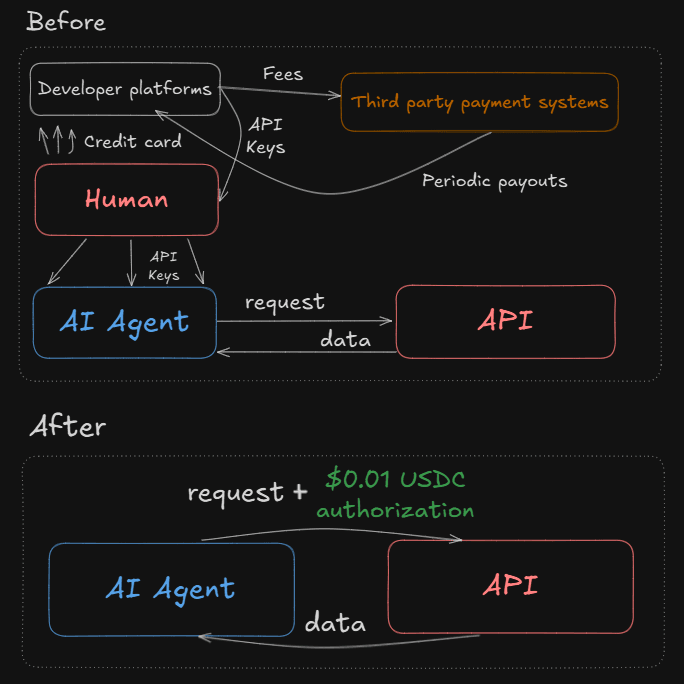
Yes, x402 is specifically designed for agent commerce. Because the payment logic is embedded in standard HTTP responses, AI agents can programmatically parse the 402 header and execute transactions without human intervention. This allows for true machine-to-machine (M2M) micropayments, enabling agents to subscribe to real-time market data or research reports on a per-request or subscription basis.
Is x402 compatible with existing data infrastructure?
The protocol is designed to be non-disruptive to existing APIs. You can wrap your current endpoints with x402 middleware to add payment gating without rewriting your core data logic. It works with various blockchain networks, including Ethereum L2s and specialized chains like Monad, allowing you to choose the settlement layer that best fits your latency and cost requirements.
What happens if a payment transaction fails?
If the payment is not confirmed within the expected timeframe, the endpoint remains locked. The 402 response continues to serve until a valid, confirmed transaction hash is presented by the client. This ensures that only paying users or agents can access premium research feeds, preventing unauthorized data scraping or free-riding on your infrastructure.
No comments yet. Be the first to share your thoughts!