Why x402 fits premium data
The architecture of premium research feeds demands a shift from human-mediated billing to machine-native settlement. Traditional payment gateways introduce friction that breaks the automation loop for AI agents. You cannot easily integrate Stripe or PayPal into a background process that needs to fetch data in milliseconds. The x402 protocol solves this by embedding payment logic directly into the HTTP response, enabling atomic, trustless settlement for AI agents without manual invoicing.
For developers building endpoints for premium research feeds, this means the data payload and the payment receipt are delivered in a single transaction. An AI research agent can verify the cryptographic proof of payment within the HTTP headers before processing the data. This eliminates the need for separate authentication tokens or session-based billing that often fails in headless environments. The protocol ensures that the agent only receives the high-value data once the cryptographic signature confirms the transaction is complete.
This approach is particularly critical for high-frequency or large-volume data requests. When an agent needs to pull real-time market data or historical research datasets, the latency introduced by external payment processors becomes a bottleneck. x402 allows the endpoint to act as both the data provider and the payment verifier. The agent sends a request with a cryptographic token; the server validates it and returns the data in the body. If the token is invalid or expired, the server returns a 402 status code with a challenge, keeping the loop closed and automated.
The result is a seamless integration between your research data and the emerging agentic economy. By adopting x402, you are not just adding a payment layer; you are future-proofing your endpoints for autonomous systems. These systems are designed to operate without human intervention, and x402 provides the infrastructure to support that autonomy securely. For more details on the technical implementation, refer to the official x402 documentation.
How the 402 handshake works
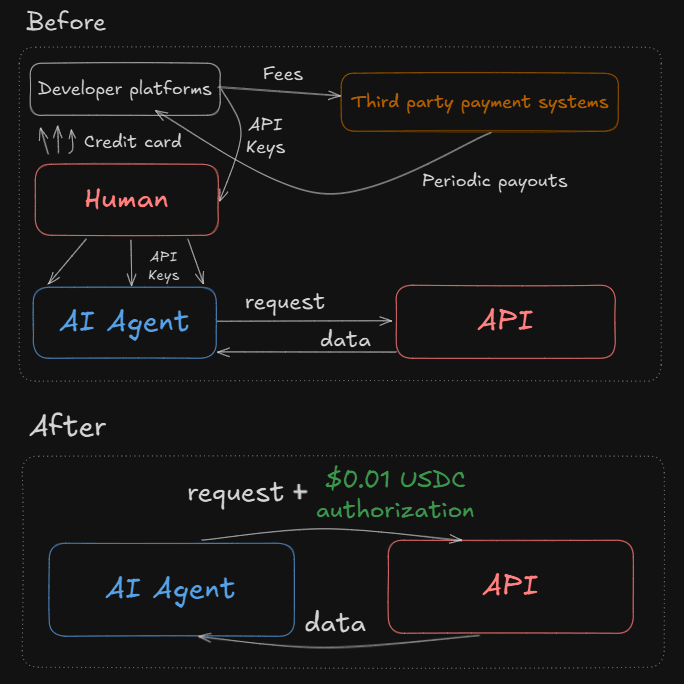
When you request premium research data from an x402 endpoint, the interaction follows a specific protocol designed to handle micropayments without breaking standard HTTP semantics. The process is not a simple login; it is a cryptographic negotiation between your client and the data provider.
The flow begins with a standard HTTP request. Your application sends a GET or POST request to the endpoint, just as it would for any public API. The server evaluates the request against its access control rules. If the data is gated, the server does not return an error code like 403 Forbidden. Instead, it returns a 402 Payment Required status code. This response is the core of the handshake.
The 402 response body contains the payment instructions. It includes the Pay header, which specifies the payment protocol (typically ACPP), the amount due, and the destination wallet address. It may also include a PayMemo if the provider requires a specific reference. At this stage, your client has the data it wants but lacks the proof of payment. The server has the proof it wants but lacks the data. The handshake resolves this by having your client construct a signed transaction.
Your client application uses a wallet provider to sign a transaction that transfers the exact amount specified in the Pay header to the destination address. This transaction is then included in a subsequent request to the same endpoint. This retry request contains the original query parameters plus the cryptographic proof of payment. The server verifies the signature and the transaction hash. If valid, it returns the premium research data with a 200 OK status.
Your application sends a standard HTTP request to the premium research endpoint. The server recognizes the request requires payment and prepares a challenge response rather than denying access outright.
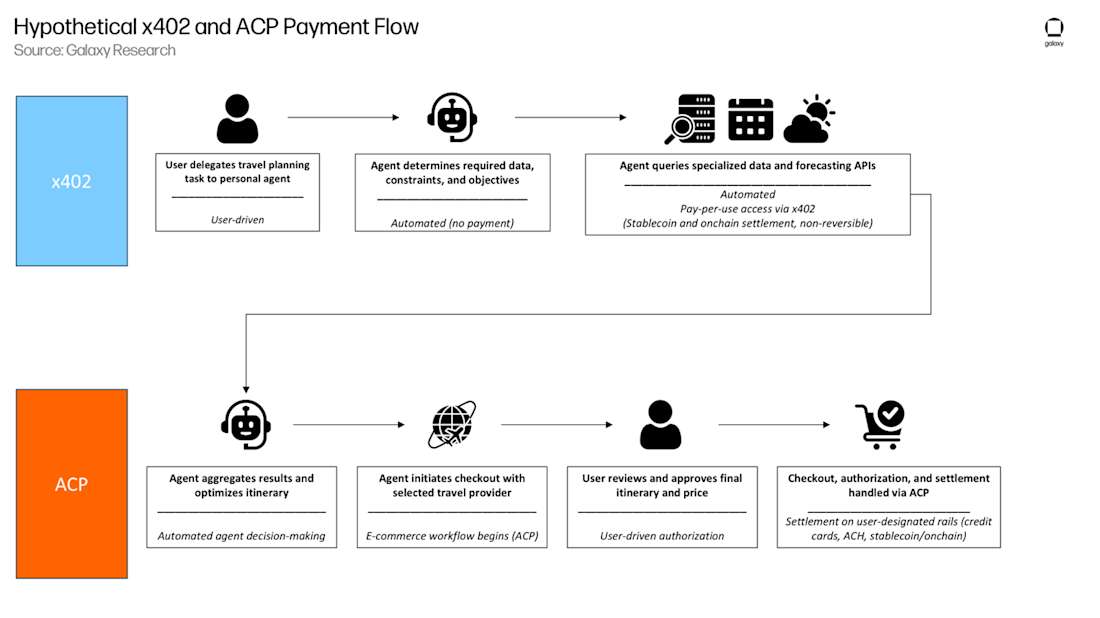
The server responds with a 402 Payment Required status. The response body includes the Pay header with the amount, currency, and destination address. Your client parses this header to understand exactly what is owed.
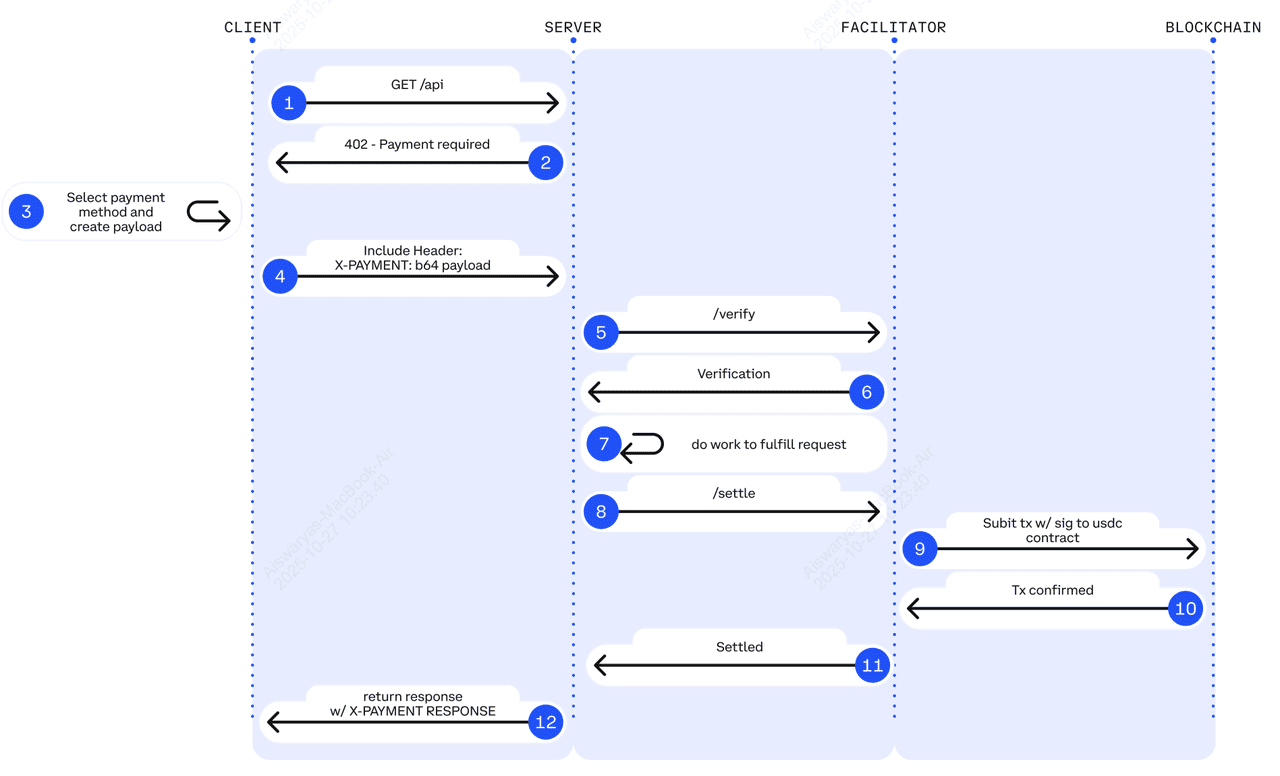
Your client constructs a signed transaction using the wallet connected to the user. The transaction transfers the specified amount (e.g., USDC) to the provider’s address. This step ensures the payment is cryptographically secure and traceable.
The client resends the original request, attaching the signed transaction proof. The server verifies the signature and the blockchain state. Upon successful verification, the server releases the premium research data in the response body.
This mechanism allows for frictionless micropayments. Because the payment is tied directly to the HTTP request, you can charge per query or per megabyte of data without managing complex subscription databases or API keys. The 402 status code ensures that the protocol remains compatible with existing HTTP clients and proxies, making it a practical solution for monetizing high-value research feeds.
Infrastructure for research feeds
Hosting x402 endpoints for premium research data requires a backend that can seamlessly handle both API requests and on-chain settlement. Unlike traditional subscription models, your infrastructure must act as a gatekeeper, verifying micro-payments in real-time before delivering sensitive market intelligence. This architecture typically relies on a facilitator to manage the complexity of stablecoin transactions, allowing your research feed to remain accessible to AI agents and developers without manual invoice processing.
Facilitator Integration
You generally have two primary paths for integration: Coinbase CDP or Thirdweb. Coinbase’s CDP Facilitator offers a robust discovery layer called the Bazaar, which helps catalog your x402-enabled services for AI agents. This integration is ideal if you want your research feed to be easily discoverable within the broader crypto ecosystem. Thirdweb provides a more developer-centric approach, allowing you to build payment-gated APIs using Next.js and their facilitator SDK. This path offers greater flexibility for custom logic, such as tiered access levels for different types of market data.
Stablecoin Handling
Your endpoint must be configured to accept stablecoins, typically USDC, on networks like Base or Ethereum. The facilitator handles the transaction verification, but your server needs to listen for payment confirmations and update user access accordingly. This ensures that only paying users receive the premium research data. The flow is straightforward: the client requests data, the facilitator processes the payment, and your endpoint delivers the response. This system removes the friction of credit card processing while tapping into the global liquidity of crypto markets.
Settlement Currency Context
The choice of settlement currency impacts both user experience and your backend complexity. USDC on Base is a popular choice due to low fees and fast finality, making it ideal for high-frequency research queries. You can monitor the performance and stability of your chosen settlement asset using live market data.
Agent integration patterns
AI agents don't just browse the web; they negotiate, purchase, and consume data streams autonomously. For premium research feeds, this means shifting from static API keys to dynamic, token-gated endpoints powered by x402. The integration pattern here is less about authentication and more about discovery and payment orchestration.
The first step for an agent is finding the right data source. The x402 Bazaar, a discovery layer built by Coinbase Developer Platform, serves as the central index for x402-enabled services. Agents can query these endpoints to find cataloged research feeds, verifying that the service accepts micropayments before attempting a connection. This eliminates the friction of manual credential management and allows agents to browse available data liquidity in real-time.
Once a feed is identified, the agent handles the transaction. Unlike traditional SaaS models that require upfront subscriptions, x402 endpoints allow agents to pay per request or per megabyte of data. This is critical for research agents that need to pull large datasets without hitting rate limits or budget caps associated with fixed-tier API keys. The payment happens in the background, often via stablecoins, ensuring the agent has immediate access to the data payload.
To understand the economic shift, consider how this compares to traditional access models.
| Feature | Traditional API Key | x402 Payment-Gated |
|---|---|---|
| Authentication | Static Key / JWT | Cryptographic Signature |
| Payment Model | Monthly Subscription | Per-Request / Micropayment |
| Discovery | Manual Directory | Automated Bazaar Index |
| Agent Fit | Low (Manual Config) | High (Autonomous) |
This architecture enables a new class of financial agents that can independently source, verify, and purchase market intelligence. By leveraging the x402 protocol, these agents treat data as a liquid asset, accessible through standard HTTP requests rather than complex enterprise contracts.
Tools for building x402 endpoints
Building an x402 endpoint for premium research feeds requires bridging traditional API logic with on-chain settlement. The ecosystem has matured from experimental scripts to structured facilitators and SDKs that handle the heavy lifting of transaction verification.
Facilitators and SDKs
Facilitators act as the middleman between your server and the blockchain. They verify the payment and signal your endpoint to release data.
- Thirdweb x402 Facilitator: This is the most common starting point for Next.js developers. It abstracts the smart contract interaction, allowing you to accept USDC payments with minimal boilerplate. Thirdweb docs provide the integration guides.
- Browserbase Integration: For research feeds that require live browser rendering, Browserbase offers a built-in x402 layer. This is ideal if your "premium" data is dynamic and requires a headless browser to access.
Hardware for Node Infrastructure
Running a reliable x402 node for high-frequency research data demands stability. You need hardware that can handle concurrent requests without dropping connections during peak market hours.


As an Amazon Associate, we may earn from qualifying purchases.
x402 Endpoints for Premium Research Feeds: Launch Checklist
Before you expose your premium research feed to the market, run through these final verification steps. A single misconfigured header or unchecked rate limit can break agent integration or expose your data to abuse.
Ensure your endpoint strictly adheres to the x402 specification. The response must include the x-payment header with a valid payment proof. Agents like those in the awesome-x402 directory rely on this standard to verify settlement before delivering data.

Confirm that your chosen blockchain (e.g., Base) settles transactions within the expected window. Premium research feeds require near-instant access; if settlement takes too long, agents will timeout. Use a testnet environment to simulate payment flows and verify that your backend updates access permissions immediately upon confirmation.

Protect your infrastructure by setting strict rate limits per wallet address. Without these controls, a single malicious agent could drain your API credits. Define clear tiers for free trials versus paid subscriptions, and ensure your endpoint rejects requests that exceed the allocated quota for the current billing cycle.

Premium researchers expect real-time or near-real-time data. Implement checksums or versioning to ensure the data returned matches the payment. If you serve historical data, clearly label it as such. Inconsistent data quality will lead to immediate churn and negative reviews in the agent developer community.
Provide clear, machine-readable documentation (OpenAPI/Swagger) that includes examples of valid x-payment headers. Developers need to see exactly how to structure their requests to your endpoint. Host this documentation publicly so agents can discover and integrate your feed without friction.
No comments yet. Be the first to share your thoughts!