Why x402 fits research data
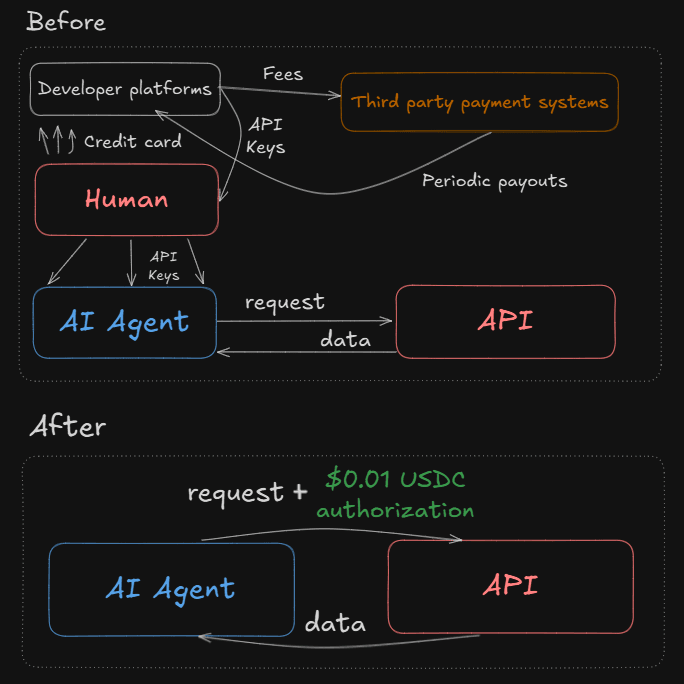
Traditional API keys and monthly subscriptions are built for a different era of software. They assume predictable usage and require human approval for every transaction, which creates friction when accessing high-value, low-frequency research data. The x402 protocol removes this bottleneck by embedding payments directly into the HTTP standard. This allows automated systems to pay per request using stablecoins without maintaining accounts or waiting for human sign-off.
For research feeds, this shift is critical. Premium market data, specialized analytics, and exclusive AI inference endpoints are often too expensive for flat-rate subscriptions but too sporadic for traditional billing models. x402 enables micro-transactions that align cost exactly with value. A researcher can retrieve a single, high-stakes data point without committing to a recurring fee.
This approach also reduces the risk of data leakage. Since payment is tied to the request itself, there is no need to share long-lived credentials that could be compromised. The protocol handles authentication and payment in one step, making it ideal for automated agents and high-stakes financial workflows where security and precision matter more than convenience.
Setting up the payment gateway
To turn a standard HTTP endpoint into an x402-gated service, you need to bridge two distinct systems: your application server and a crypto wallet. The x402 standard relies on the Payment header to communicate intent, but it doesn't handle the actual transaction logic. That is where the facilitator comes in.
Think of the facilitator as the middleman that speaks both "HTTP" and "blockchain." Your server doesn't need to understand complex smart contract interactions; it just needs to ask the facilitator to check if a payment was made. The facilitator then handles the wallet connection, transaction signing, and verification.
1. Choose and configure your facilitator
The first step is selecting a facilitator that supports the specific blockchain you want to use for payments. For research feeds, stablecoins like USDC are often preferred to avoid volatility during the payment window. You will need to register your endpoint with the facilitator, providing the URL path that should be protected.
The facilitator generates a unique identifier for your endpoint. You will need to embed this identifier into your server's response logic. When a client requests data, your server checks for the Payment header. If it's missing, the server responds with a 402 Payment Required status and a Pay-Url header pointing to the facilitator's payment interface.
Identify a facilitator that supports your target chain. Most providers offer SDKs for Node.js, Python, and Go. Configure the SDK with your API keys and the wallet address that will receive the payments.

Decide whether you are charging per request, per megabyte of data, or via a subscription. The facilitator usually handles the accounting, but you must define the price in the smallest currency unit (e.g., cents or wei) for your chosen asset.
Update your server logic to intercept requests. If the Payment header is absent or invalid, return a 402 status code. Include the Pay-Url header provided by your facilitator. This URL allows the client to initiate the payment flow directly.
Once the client sends a request with a valid Payment header, your server should verify the transaction hash with the facilitator. Only after confirmation should you return the premium research data. This prevents "free riders" from accessing content without paying.
2. Handle the wallet integration
The client side of the equation is equally important. Your API consumers need a way to pay. Most modern web3 wallets (like MetaMask or Coinbase Wallet) can interact with x402 endpoints if they support the Payment header. However, you may need to provide documentation or a SDK for your clients to handle the payment flow seamlessly.
Create clear instructions for developers integrating with your API. Show them how to construct the Payment header and how to handle the 402 response. Include code snippets in their preferred language.

Before going live, test your endpoint on a testnet. This ensures that your facilitator configuration is correct and that your server properly handles payment verification. Use test tokens to simulate transactions without risking real funds.
Set up alerts for failed payments or unusual activity. While x402 is designed to be simple, blockchain transactions can fail due to network congestion or insufficient gas. Your facilitator should provide logs to help you troubleshoot these issues.
3. Manage stablecoin volatility
Since you are dealing with financial data, stability is key. If you accept volatile assets like Bitcoin, the value of your payment might fluctuate significantly between the time the client initiates the payment and the time you verify it. This can lead to disputes or lost revenue.
Using a stablecoin like USDC or USDT mitigates this risk. The value remains pegged to the US dollar, making it easier for you to set consistent prices for your research feeds. Most facilitators support multiple stablecoins, so you can offer flexibility to your clients while maintaining price stability.
4. Compare facilitator options
Not all facilitators are created equal. Some offer more robust SDKs, better documentation, or lower fees. Use the table below to compare the key features of popular x402 facilitators.
| Facilitator | Supported Chains | SDK Availability | Fee Structure |
|---|---|---|---|
| Facilitator A | Ethereum, Polygon | Node.js, Python | 1% per transaction |
| Facilitator B | Arbitrum, Optimism | Go, Rust | 0.5% per transaction |
| Facilitator C | Base, BNB Chain | All major languages | 2% per transaction |
Choose the facilitator that best aligns with your technical stack and target blockchain. The goal is to minimize friction for both you and your clients, ensuring that the payment process is as smooth as the data delivery itself.
Structuring the x402 Research Endpoint
Designing a premium research endpoint requires treating the API not just as a data pipeline, but as a secure gatekeeper. The goal is to ensure that high-value intelligence—such as competitor analysis or sales signals—only flows to authenticated, paying clients. This structure relies on the x402 standard to validate payment before the server commits resources to generating the report.
The Validation Gate
The entry point of your endpoint must intercept the request before any business logic executes. Instead of checking an API key alone, the server should verify the presence of a valid x402 payment proof. If the proof is missing or invalid, the endpoint returns a standard HTTP error, effectively blocking access. This step is critical for preventing unauthorized scraping of premium datasets.
Response Structure
Once validation passes, the endpoint should return data in a format that is both machine-readable and easy for frontend clients to parse. JSON remains the standard, but the payload should clearly distinguish between metadata (like report generation time) and the core intelligence. For example, a /v1/competitors/analyze endpoint might return a structured object containing market share percentages, SWOT analysis points, and strategic recommendations.
Security and Rate Limiting
Security extends beyond payment validation. Since these endpoints handle sensitive market data, you must implement strict rate limiting based on the client’s subscription tier. This prevents a single paying user from exhausting server resources with automated requests. Additionally, consider encrypting the response payload for extra layers of protection, especially when transmitting financial forecasts or proprietary research.
Example Endpoint Flow
A typical flow might look like this:
- Request: Client sends a GET request to
/v1/company/researchwith an x402 payment proof in the headers. - Validation: Server verifies the proof against the x402 network.
- Processing: If valid, the server queries the internal database for the latest company intelligence.
- Response: Server returns the research data with a 200 OK status.
This approach ensures that your premium research feeds remain both accessible to legitimate users and secure from unauthorized access. By integrating x402 directly into your endpoint design, you create a seamless, trustless transaction model that aligns with the future of web commerce.
Handling Agent-Commerce Flows
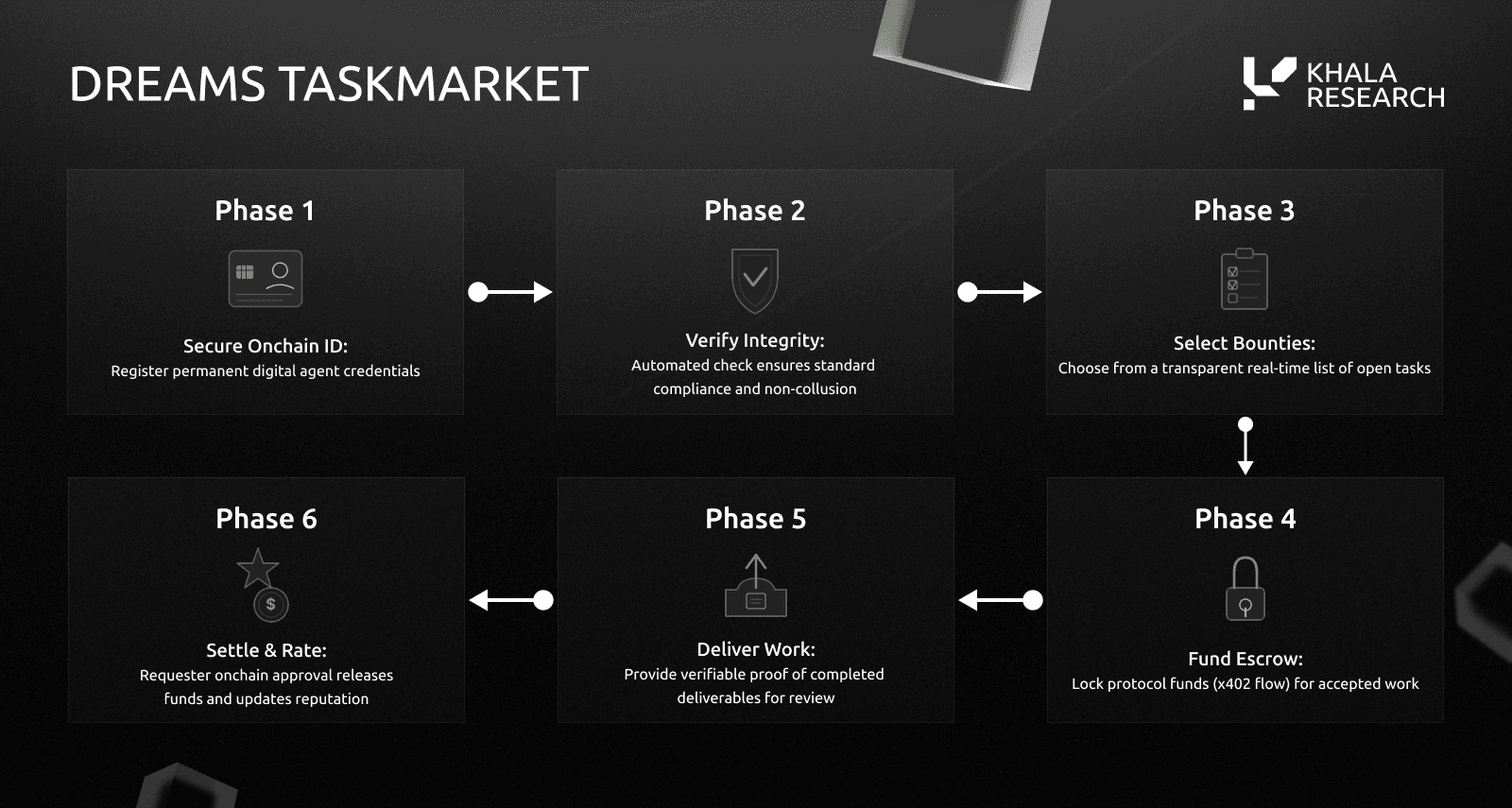
The real value of x402 emerges when AI agents autonomously pay for and consume research data without human intervention. This protocol removes the friction of account creation, credit card on file, or manual approval steps that traditionally block machine-to-machine transactions. By leveraging HTTP-native headers, agents can settle payments in stablecoins for every individual API request, enabling true per-use billing.
For premium research feeds, this means a trading bot can fetch real-time market data, verify the response, and settle the micropayment in a single atomic flow. The agent never needs to store sensitive financial credentials, reducing security exposure while increasing transaction velocity.
AWS and other infrastructure providers are building tools to integrate x402 into existing HTTP applications, making it easier for financial services to adopt agentic commerce without rewriting core systems. This approach aligns with the high-stakes nature of financial data, where speed and security are non-negotiable.
Common Integration Mistakes
Even with clear documentation, implementing x402 endpoints often trips up developers who treat payment logic as an afterthought. The protocol is simple in theory, but the devil is in the configuration details, particularly around how your facilitator handles state and error states.
Misconfigured Facilitator Parameters
The facilitator acts as the middleman verifying payment before granting access. If you misconfigure the expected token, amount, or chain ID, the endpoint will reject valid transactions or, worse, accept invalid ones. Monad’s official guide emphasizes that the facilitator contract must be deployed and whitelisted correctly on the target network (testnet or mainnet) before your endpoint can process any x402 headers. A mismatch here is the most common reason for "silent failures" where requests hang indefinitely.
Ignoring Failed Transaction States
A robust x402 implementation must handle more than just successful payments. If a user’s transaction fails, gets reverted, or is underpriced, your endpoint needs a clear fallback strategy. Simply returning a 500 error is unhelpful; you should return a specific 402 status with a message indicating the payment was insufficient or failed. Without proper error handling, debugging becomes a nightmare, as you won’t know if the issue is network congestion, user error, or a bug in your smart contract logic.
Verify payment settlement
Before your API returns the premium research payload, you must confirm the transaction has settled on-chain. x402 payments are not instant; they require block confirmation to prevent double-spending or chain reorgs from reversing the fee. Treating a pending transaction as paid is a critical vulnerability that exposes your data to free riders.
Use a live price widget to contextualize the transaction value and ensure the fee aligns with current market rates.
Consult the Coinbase Developer Platform quickstart guide for specific implementation details on monitoring payment status. Their documentation outlines the exact HTTP flow for validating that the x-payment header corresponds to a confirmed on-chain event. Only after this verification step should you grant access to the endpoint.
Next steps for deployment
Moving from testnet to mainnet requires a disciplined checklist. Your goal is to ensure the x402 endpoints handle real value without leaking data or funds. Follow these steps to secure your premium research feeds.
Generate a dedicated hot wallet for transaction signing. Fund it with a small amount of USDC on the target chain. Test the payment flow to ensure the facilitator correctly routes funds to your wallet address.
Premium data is a high-value target. Implement strict rate limits on your API endpoints to prevent denial-of-service attacks or excessive consumption by single users. Monitor logs for unusual request patterns during the first week.
Ensure your API returns clear HTTP status codes for failed payments or invalid tokens. The x402 standard relies on clean HTTP responses; vague errors will frustrate AI agents and human developers alike.
Once live, track payment volume against data access. Use a dashboard to visualize revenue per endpoint. This data helps you adjust pricing tiers and identify which research feeds are most valuable to your users.
No comments yet. Be the first to share your thoughts!