What x402 enables for data sellers
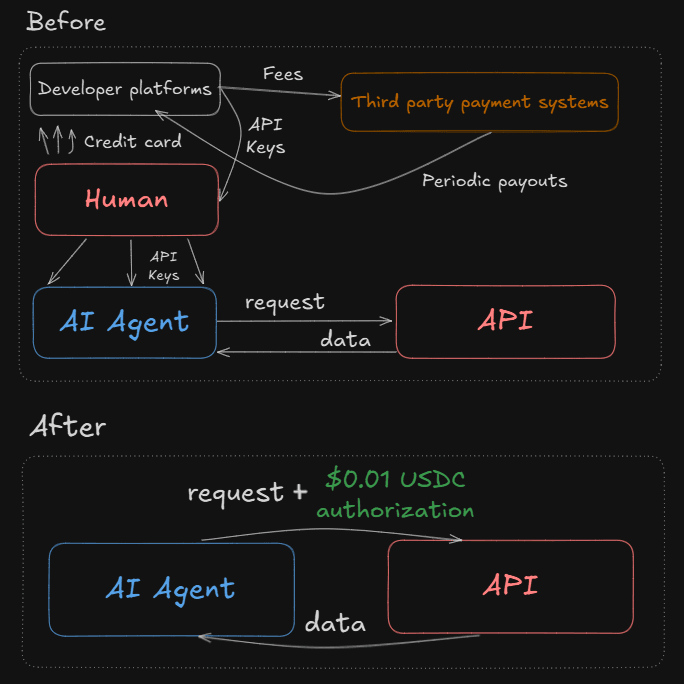
x402 is an open payment standard built directly into the HTTP protocol. It allows AI agents to pay for data or API access using stablecoins, without needing to create accounts, store credit cards, or wait for human approval. For data sellers offering premium research feeds—like real-time market data or specialized weather models—this removes the friction that traditionally blocks automated commerce.
The mechanism is straightforward. When an AI agent requests a resource, the server checks for payment. If the balance is insufficient, the server returns a 402 status code along with a payment instruction. The agent then uses a cryptocurrency wallet to send the exact amount required. Once the transaction is confirmed on the blockchain, the server grants access to the requested data. This process happens in milliseconds, enabling high-frequency data consumption that was previously impossible with traditional payment gateways.
This shift is particularly valuable for premium research feeds. Market data providers, for instance, can monetize individual API calls rather than relying on expensive monthly subscriptions. An AI trading bot can pay per request for the latest stock quotes, using only the funds it earns from successful trades. This pay-per-use model aligns costs directly with value, making it easier for data sellers to offer granular, high-value datasets without managing complex billing relationships.
The four-step payment flow
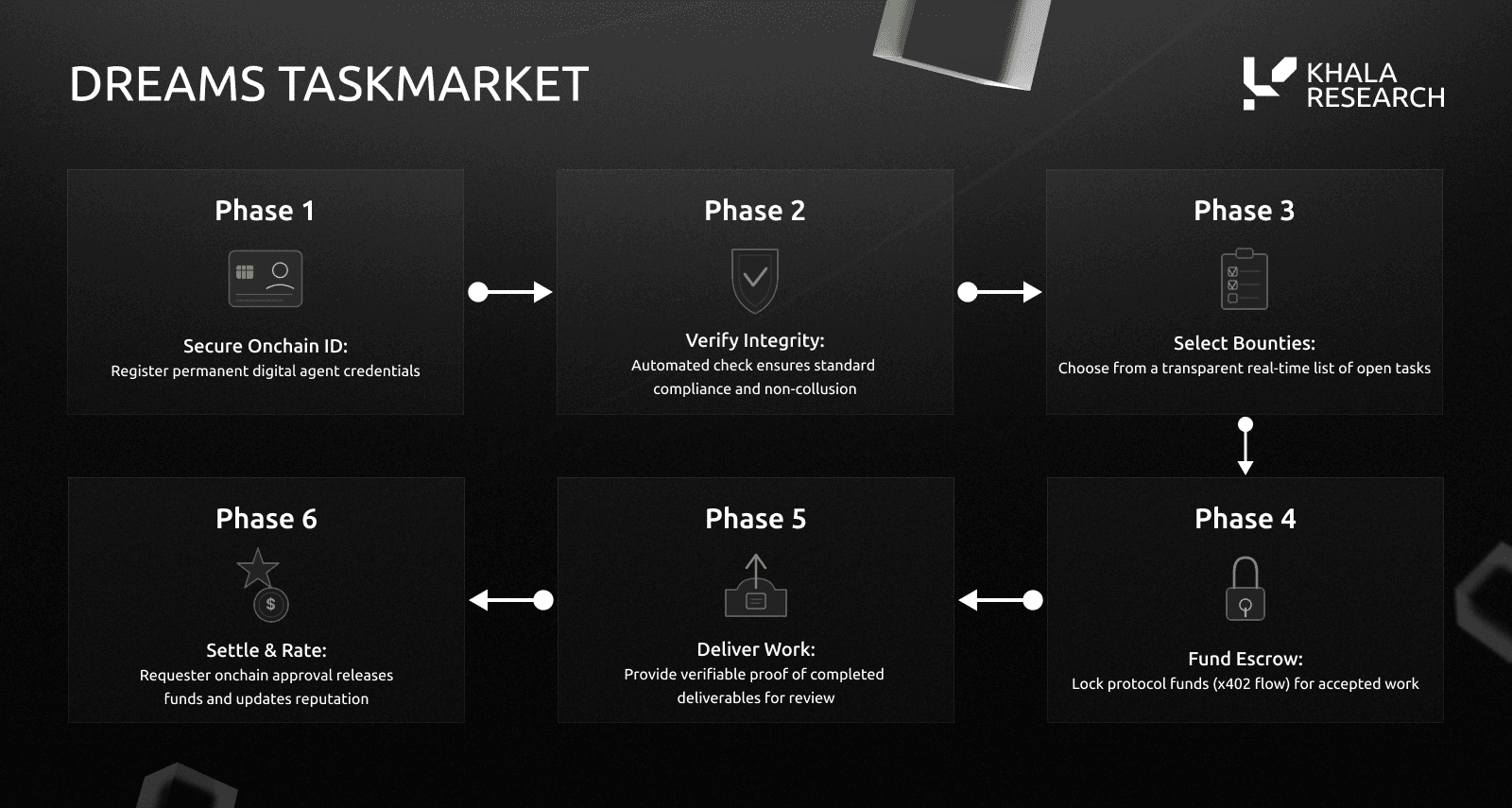
Getting data from a premium research feed isn’t a handshake; it’s a transaction. The x402 standard turns the HTTP protocol into a payment rail. Instead of relying on API keys or subscription tokens, the server simply tells the client to pay.
Here is the exact sequence that happens when your application requests market data or weather insights.
402 Payment Required
status code. This is the core of x402. The response body contains a
Payment-Receipt
or
Paywall
header. This header tells the client exactly how much to pay, which cryptocurrency to use, and the destination wallet address. It might also include a
Payment-Intent
ID to track the transaction.
Payment-Receipt
header or the transaction hash in the request. The server validates the proof against the blockchain. If the payment is confirmed, the server returns the
200 OK
status with the requested premium data.This flow is deterministic. There is no ambiguity about whether the payment went through. The server only releases the data when the proof is verified. This eliminates the need for complex subscription management systems or third-party payment processors for individual API calls.
For developers building on-chain data tools, this means your application can instantly monetize access to real-time feeds. A user can request a specific market indicator, pay the fee, and receive the data in seconds. The entire cycle happens without leaving the application interface.
The beauty of this system is its simplicity. You don’t need to build a backend database to track user subscriptions. You don’t need to handle credit card disputes or chargebacks. The blockchain handles the settlement, and the HTTP protocol handles the delivery. It’s a clean separation of concerns that makes building premium data services much easier.
Integrating stablecoins into your API
Using stablecoins like USDC for x402 payments removes the friction of traditional credit card processing. Instead of dealing with chargebacks, merchant accounts, or high gateway fees, your API accepts direct on-chain settlements. This approach is particularly effective for premium research feeds, where micro-transactions for market data or weather updates need to be cheap and instant.
To avoid managing private keys or complex smart contract logic yourself, you should use a facilitator. Tools like Thirdweb or the Coinbase Developer Platform (CDP) handle the heavy lifting. They provide the infrastructure to detect incoming payments and automatically grant access to your endpoint. This allows you to focus on building the API rather than debugging blockchain transactions.
Here is how the integration typically works in practice:
- Set up the Facilitator: Create a project in Thirdweb or Coinbase CDP. These platforms provide SDKs that integrate directly with your backend.
- Define the Price: Set the cost per request or per minute of access in USDC. The facilitator handles the conversion and routing.
- Verify Payment: When a client calls your API, the facilitator checks for a valid x402 token. If the payment is confirmed on-chain, the request is allowed through.
This setup turns your API into a self-sustaining resource. Buyers see the price, pay, and get access without leaving the request flow. It’s a seamless way to monetize data without the overhead of traditional payment processors. By leveraging these facilitators, you can deploy a payment-gated API in hours, not weeks.
Designing endpoints for AI agents
When building x402 endpoints for premium research feeds, you’re not just writing an API; you’re building a vending machine that speaks machine. AI agents don’t read terms of service or click checkout buttons. They parse headers, verify signatures, and expect immediate delivery. If your endpoint requires human intervention, it fails.
Idempotency is non-negotiable
Agents may retry requests due to network timeouts or ambiguous responses. Your endpoint must handle duplicate payment signatures gracefully. Use the Idempotency-Key header to track unique requests. If a payment has already been verified and data delivered, return the same 200 OK with the cached payload. Do not charge the agent twice. A failed idempotency check can lead to double-spending disputes or lost data, breaking trust in the autonomous loop.
Low latency dictates architecture
Agents operate in milliseconds. A premium market data feed or real-time weather API cannot afford the latency of a traditional payment processor handshake. Process the x402 payment validation synchronously within the request lifecycle. If the signature is valid, deliver the data. If not, return a 402 Payment Required immediately. Pre-approve known agent wallets or use fast-finality stablecoins to avoid blockchain confirmation delays. Every second of latency reduces the agent’s ability to act on time-sensitive data.
Machine-readable payment instructions
Your API documentation must be precise. Agents parse OpenAPI specs or JSON-LD schemas to understand how to pay. Clearly define the Payment-Link header or the expected query parameter for the transaction hash. Include example curl commands that agents can replicate. Avoid ambiguous error messages like "Payment failed." Instead, return structured errors like "error": "signature_expired" so the agent can adjust its retry logic. This clarity turns a complex financial transaction into a simple function call.
Common integration mistakes to avoid
When building x402 endpoints for premium research feeds, the devil is in the details. A missing header or a flawed retry strategy can turn a reliable data stream into a broken pipeline. Below are the most frequent pitfalls and how to sidestep them.
Ignoring idempotency keys
Without an Idempotency-Key header, your endpoint cannot distinguish between a legitimate retry and a duplicate request. If a network hiccup causes your client to resend a payment for a weather forecast or market data query, the server might process it twice. Always validate and reject duplicate keys to ensure your users aren’t charged for the same data slice twice.
Failing to handle network retries gracefully
Networks are unreliable. If your client times out while waiting for a response, it will retry. Your x402 server must be prepared to handle these back-to-back requests without crashing or double-processing. Implementing a simple queue or state check for pending transactions prevents race conditions that could corrupt your research feed data.
Exposing payment logic in client-side code
Never validate payments or expose private keys in the browser. This is a major security risk. Payment verification should happen entirely on the server side. The client should only send the payment proof and receive the data; it should never hold the keys to the kingdom. This keeps your integration secure and your users’ funds safe.
Helpful gear
Use these product recommendations as a starting point, then choose the size, material, and price point that fit how you actually use the gear.



As an Amazon Associate, we may earn from qualifying purchases.
No comments yet. Be the first to share your thoughts!